
Stucco contractor in St. George.
Three-coat traditional, EIFS, repairs, and custom finishes, applied by hand. Serving homeowners, custom home builders, and general contractors in St. George since 2001.

| County | Washington, UT |
|---|---|
| Trade | Stucco / ST |
| Scopes | 6 |
| Working since | 2001 |
Working in St. George
We know St. George walls.
St. George sits near 2,530 feet on the floor of the Virgin River basin, inside IECC climate zone 3B. That combination works on cement plaster from two opposite directions. In summer, a west elevation runs far hotter than the air, so a fresh brown coat gives up its mix water before the cement has finished hydrating and you get shrinkage crazing across the field. Then winter arrives. The long period of record summary for the St. George weather station shows roughly 97 nights a year at or below 32 degrees, so any moisture held in the plaster gets a freeze cycle behind it. Underneath all of that is the ground. The Utah Geological Survey calls expansive soil and rock the most troublesome construction condition in the St. George and Hurricane area, and Chinle clay, the material locals call blue clay, swells when it takes on water. Foundations move, and stucco is the layer that shows the movement first.
We plan joints before we plan mixes. Control joints get laid out to break large fields into panels and to land on framing changes and openings, with diagonal reinforcement at window and door corners where cracks start. Weep screed goes in with clearance above finish grade so the wall drains instead of wicking. Lath is fastened to framing, not just to sheathing, and the water resistive barrier is lapped shingle style. Cure matters more here than almost anywhere. We schedule scratch and brown coats to follow the shade around the building, moist cure the brown coat, and hold the full cure before color or paint goes on.
| Elevation | 2,530 ft |
|---|---|
| Climate zone | 3B |
| Permits | St. George Community Development, 61 S Main St |
The Historic Preservation Commission acts as the design review committee for properties in the Arts District overlay, and communities such as SunRiver require Architectural Review Committee approval before exterior changes.
Utah Geological Survey Special Study 127 maps expansive soil and rock as the most troublesome construction condition in the St. George and Hurricane area. The expansive material is largely Chinle Formation clay, known locally as blue clay.
Around town: Desert Color, SunRiver, Little Valley, historic downtown district
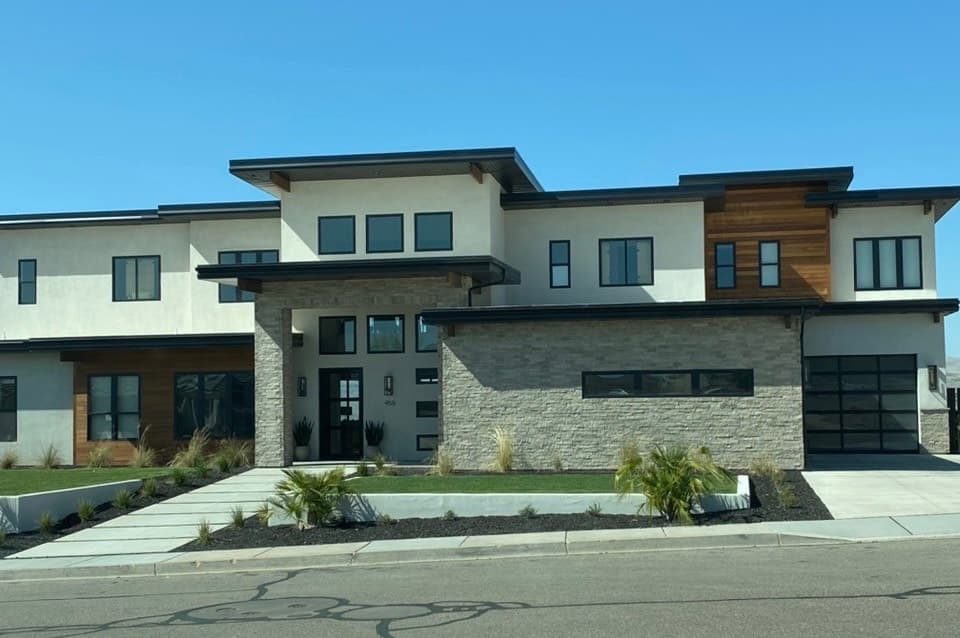
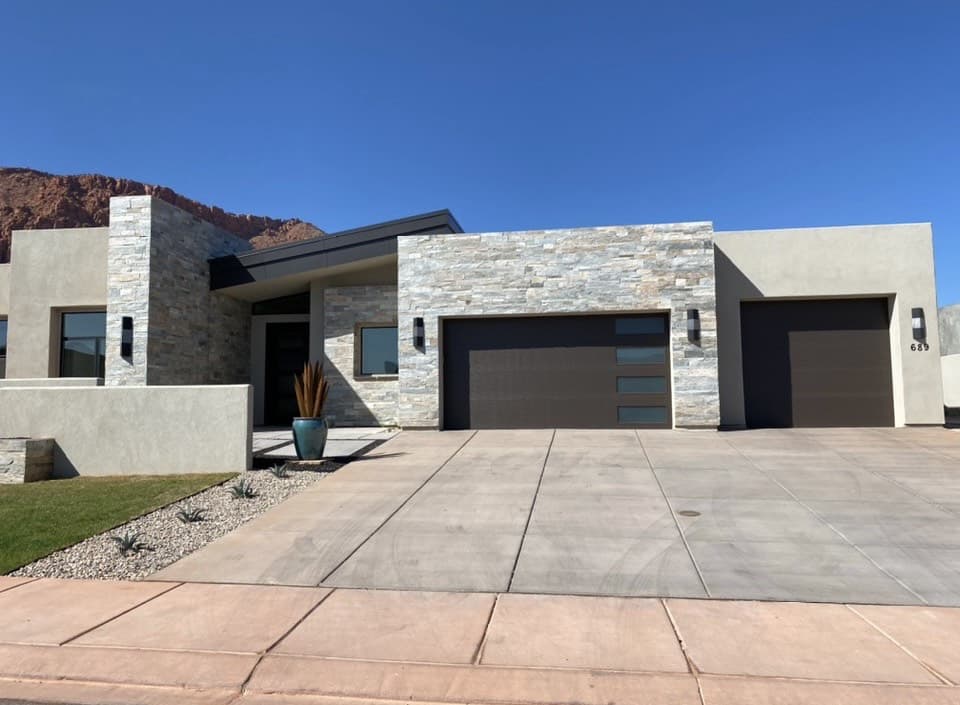
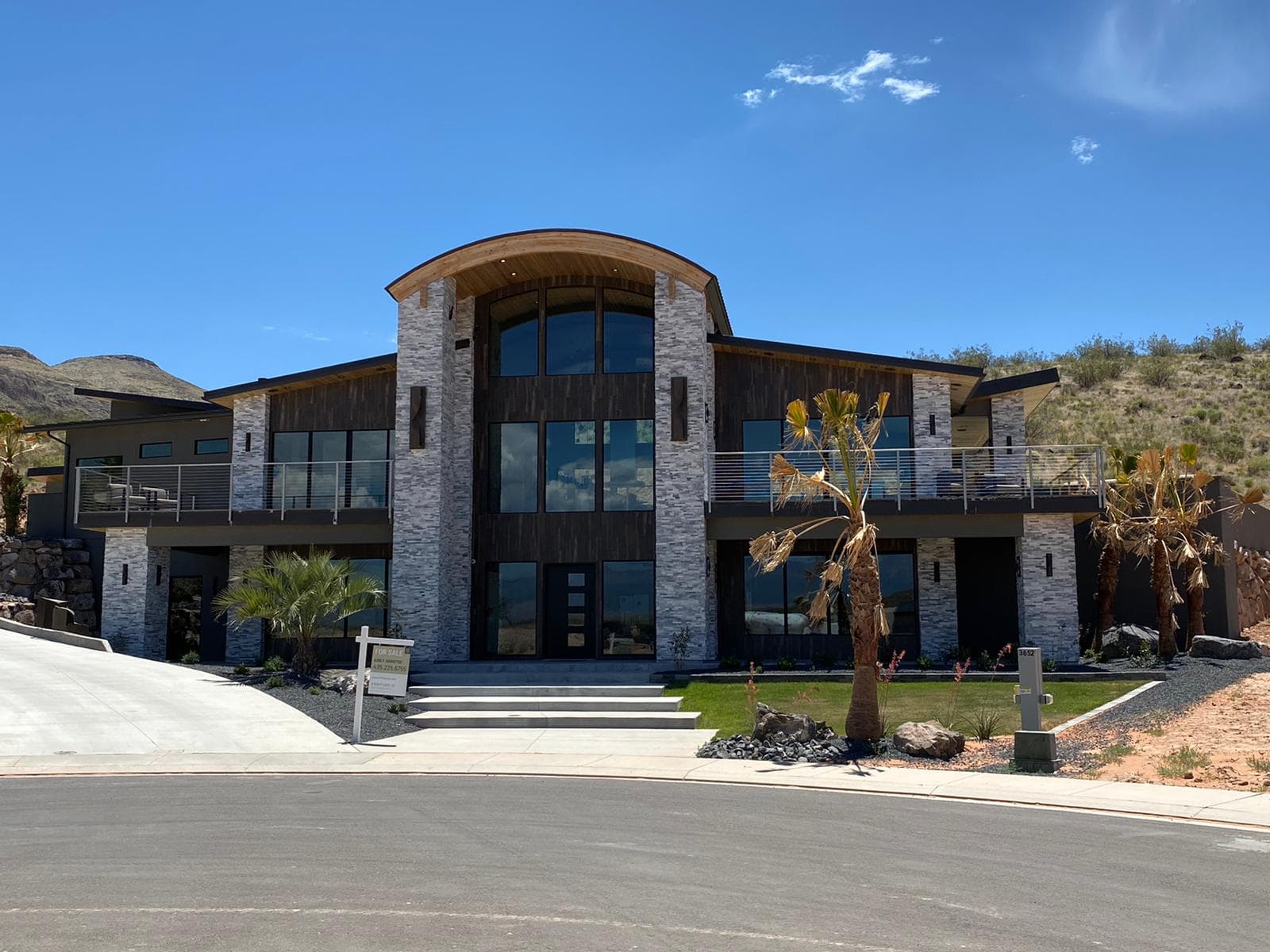
Stucco scope
A complete scope.
A finish coat lasts thirty years when the lath spacing, brown coat hydration, and corner detail are right. Most failures aren't about the finish, they start in the layers no one sees.
- 01Traditional 3-coat stucco
- 02EIFS systems
- 03Stucco repairs and matching
- 04Custom finishes & textures
- 05Color coat application
- 06Foam shapes & cornices
Other trades in St. George
Three more trades, all in-house.
St. George questions
Asked in St. George.
Specific to stucco work here, not general questions about working with us.
Do I need a permit to re-stucco a house in St. George?
Probably, and it is worth one phone call to find out. The exempt work list in the residential code Utah uses covers painting, papering, tiling, carpeting, cabinets, counter tops and similar finish work. Exterior cladding is not on that list, so a re-stucco is not automatically exempt the way a repaint is. St. George handles residential permits through Community Development at 61 South Main Street, and applications go through the CityInspect portal. Call 435-627-4000 with your scope before you schedule work. A small patch and a full recoat are not the same conversation.
Why do hairline cracks show up on the south and west walls of my St. George house but not the north?
Sun load. A south or west elevation here takes direct afternoon radiation for most of the year, and the plaster surface runs much hotter than the shaded side of the same house. That wall expands and contracts more every single day. Cement plaster is strong in compression and weak in tension, so daily cycling opens fine map cracking in the field long before the north wall shows anything. Color coat and paint fade on those same walls for the same reason. It reads as thermal, not structural, as long as the cracks stay fine and stay in the field.
How long should new stucco cure before it gets painted in St. George?
Longer than the calendar suggests, because heat speeds up the surface and not the chemistry. Cement plaster keeps hydrating and keeps releasing alkalinity for weeks after it feels dry. Paint it too early in July and you can get burn through, uneven sheen, or poor adhesion where the film sits on a high pH surface. We moist cure the brown coat, let the finish coat carry its own cure, and check moisture before priming. If a schedule truly cannot wait, a masonry primer formulated for high pH substrates buys some margin, but waiting is still the better answer.
What is a weep screed and why does it matter on a slab on grade home in St. George?
A weep screed is the perforated metal edge at the bottom of a stucco wall that lets water which gets behind the plaster drain back out. Most St. George houses are slab on grade with rock mulch and drip irrigation pushed right up to the wall, so it is easy for the screed to end up buried by soil or a raised planter. Once it is buried the wall has nowhere to drain and moisture sits in the assembly. That is how you get soft plaster, rust stains bleeding through, and rot at the bottom plate. Keeping finish grade below the screed is one thing a homeowner fully controls.
Worth reading before you bid it out.
Tell us about your St. George project.
We respond within one business day with a site walk, a sample, or a line-item estimate.
| Response | One business day |
|---|---|
| Hours | Mon-Fri, 8am to 5pm |