
Stucco contractor in LaVerkin.
Three-coat traditional, EIFS, repairs, and custom finishes, applied by hand. Serving homeowners, custom home builders, and general contractors in LaVerkin since 2001.

| County | Washington, UT |
|---|---|
| Trade | Stucco / ST |
| Scopes | 6 |
| Working since | 2001 |
Working in LaVerkin
We know LaVerkin walls.
La Verkin sits at 3,816 feet on the bench above the Virgin River, and it is the western anchor of the Utah Geological Survey's State Route 9 corridor geologic hazard study. That study, Special Study 148, covers 97 square miles from the eastern part of La Verkin City to Springdale's boundary with Zion, and it maps collapsible soil, expansive soil and rock, gypsiferous soil and rock, soil piping, erosion, flooding and debris flows across the corridor. Every one of those matters to stucco, because stucco is a rigid skin bonded to whatever the foundation is doing. Collapsible soil settles when it first gets wet, which means a new house can move after the landscaping goes in. Gypsiferous soil dissolves and can attack cement-based materials in contact with it. Washington County is climate zone 3B, so the limiting factor most of the year is heat pulling water out of the mix rather than cold, and the monsoon runs mid June through September.
We treat the geologic hazard mapping as design input rather than paperwork. Where the soils report flags collapsible or expansive ground, the control joint layout is drawn to it: joints at the movement lines, at substrate transitions and at re-entrant corners, not on a default spacing. Where gypsiferous soil is in play, we keep cement-based materials clear of ground contact and detail positive drainage away from the base of the wall. In 3B summer heat we damp cure and shade the work so the mix does not lose water before it hydrates. Weeps and the drainage plane are sized for monsoon volume, not average rainfall.
| Elevation | 3,816 ft |
|---|---|
| Climate zone | 3B |
| Permits | La Verkin City building inspection division |
La Verkin is the western end of the Utah Geological Survey Special Study 148 corridor, which maps collapsible soil, expansive soil and rock, gypsiferous soil and rock and soil piping.
Around town: Virgin River gorge, Confluence Park
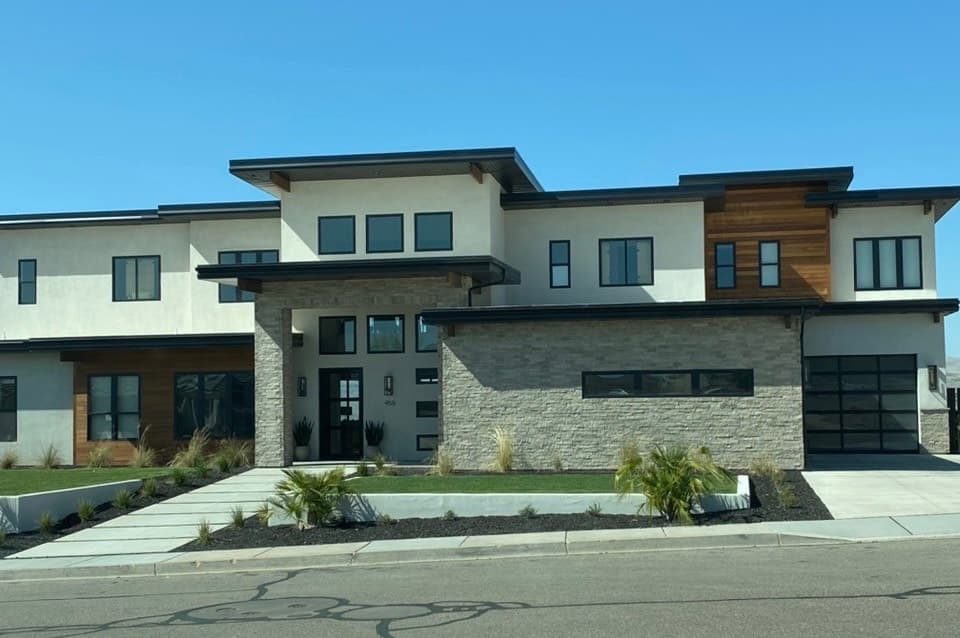
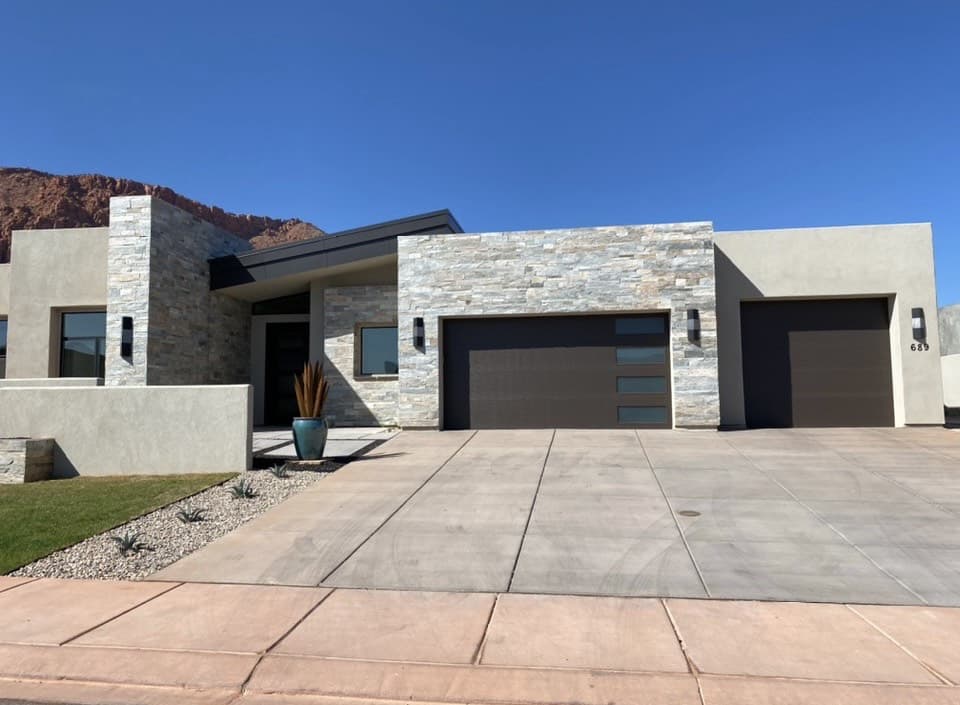
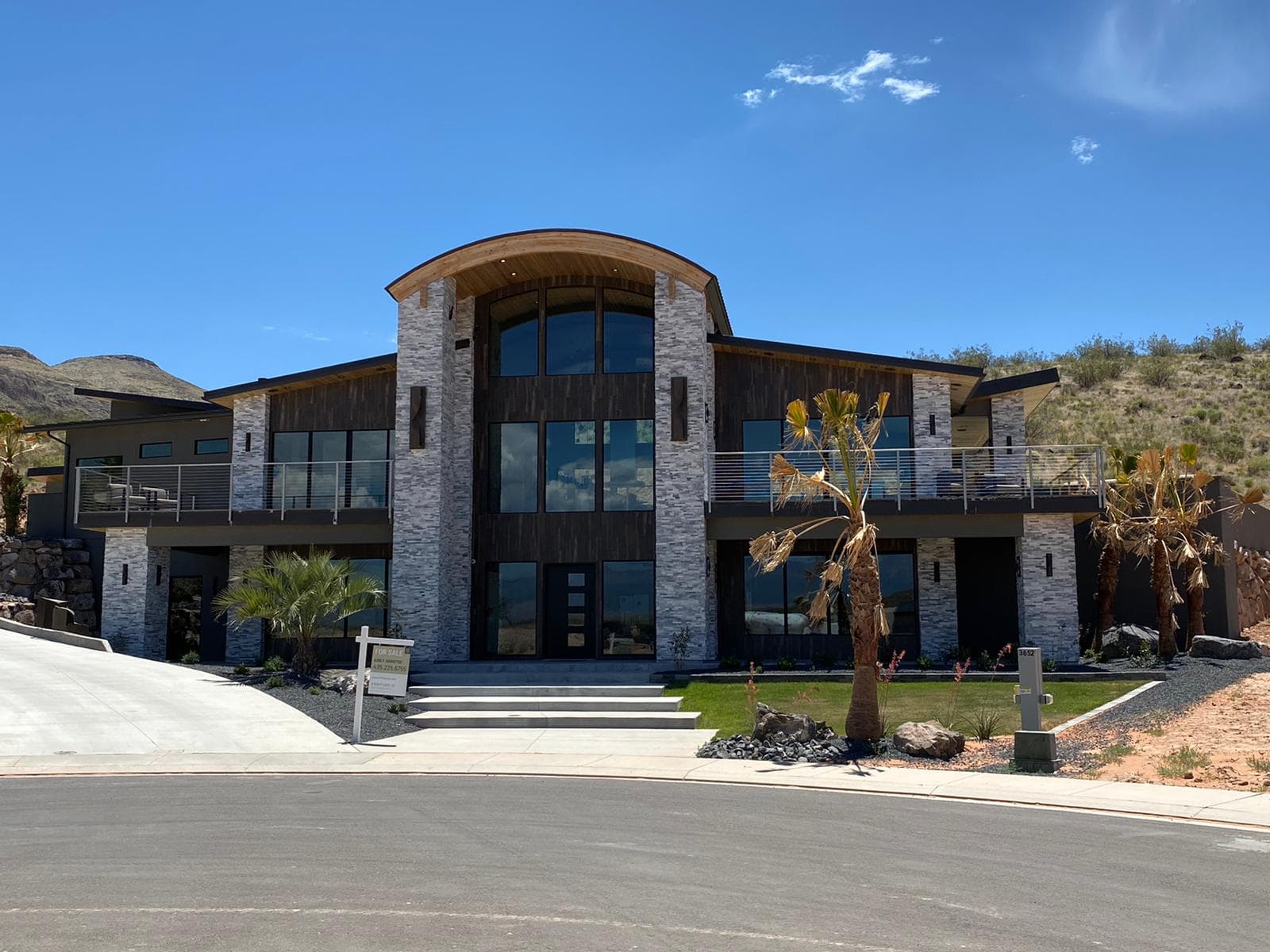
Other trades in LaVerkin
Three more trades, all in-house.
Stucco scope
A complete scope.
A finish coat lasts thirty years when the lath spacing, brown coat hydration, and corner detail are right. Most failures aren't about the finish, they start in the layers no one sees.
- 01Traditional 3-coat stucco
- 02EIFS systems
- 03Stucco repairs and matching
- 04Custom finishes & textures
- 05Color coat application
- 06Foam shapes & cornices
LaVerkin questions
Asked in LaVerkin.
Specific to stucco work here, not general questions about working with us.
What soil problems in La Verkin affect stucco?
Utah Geological Survey Special Study 148 covers the State Route 9 corridor starting at the eastern part of La Verkin City, and it publishes maps for collapsible soil, expansive soil and rock, gypsiferous soil and rock, soil piping, erosion and flooding. Collapsible soil holds up fine dry and settles when wetted, which is why problems often appear after irrigation goes in. Expansive soil swells and shrinks with moisture. Gypsiferous soil is corrosive to cement-based materials in contact with it. All three move or attack the assembly stucco is bonded to, and that is what cracks a wall.
Who issues a stucco permit in La Verkin?
La Verkin City handles it directly rather than sending you to Washington County. The city publishes a building permit packet on its website at laverkin.gov and city staff will walk you through the application. Under the city code, permits are issued through the building inspection division, and depending on the scope some projects need planning commission approval first. If the property is outside city limits, Washington County Community Development runs the permit and inspection process and accepts applications only through its online system.
Why does stucco crack in a straight vertical line on some La Verkin houses?
A clean straight crack usually means the wall found its own joint because nobody gave it one. Stucco shrinks as it cures and moves with temperature, and it has to relieve that somewhere. Add differential foundation movement from collapsible or expansive soil, which Special Study 148 maps through this corridor, and the wall will crack at the weakest line, typically at a substrate change or above an opening. Placing control joints deliberately does not stop the movement, it decides where it shows. That is the whole point of the layout.
Worth reading before you bid it out.
Tell us about your LaVerkin project.
We respond within one business day with a site walk, a sample, or a line-item estimate.
| Response | One business day |
|---|---|
| Hours | Mon-Fri, 8am to 5pm |