
Stone Masonry contractor in St. George.
Dry-stack, ledger, and natural veneer, set by masons, not pieceworkers. Serving homeowners, custom home builders, and general contractors in St. George since 2001.

| County | Washington, UT |
|---|---|
| Trade | Stone Masonry / SM |
| Scopes | 6 |
| Working since | 2001 |
Working in St. George
We know St. George walls.
Stone veneer in St. George lives or dies on water management rather than on the stone itself. Mortar is the vulnerable part. The ground here carries gypsum, and the Utah Geological Survey maps gypsiferous soil and rock across the St. George and Hurricane area, so dissolved sulfates plus hard local water move salt through masonry. When that water evaporates at the face you get efflorescence, the white bloom homeowners notice first. Add roughly 97 nights a year at or below freezing in the long term record for the St. George station, and any joint holding water gets a freeze cycle that works mortar loose over time. Then there is weight and rigidity. Adhered veneer is lighter than full bed stone, but it is still a stiff continuous skin on a house sitting over expansive Chinle clay. When the foundation moves, joints crack well before stone does.
Drainage plane first. Veneer goes over lath and a scratch coat with a drainage mat or two layers of water resistive barrier behind it, flashed at every horizontal termination, and the bottom of the veneer is held clear of finish grade so it never sits in irrigation water. Mortar gets mixed to a consistent water ratio batch to batch, because color shift between batches shows badly on a sunlit wall. Joints are tooled once rather than reworked, which keeps the surface dense. Where veneer wraps a corner or meets stucco we build a real transition instead of butting two materials together and caulking the seam.
| Elevation | 2,530 ft |
|---|---|
| Climate zone | 3B |
| Permits | St. George Community Development, 61 S Main St |
The Historic Preservation Commission acts as the design review committee for properties in the Arts District overlay, and communities such as SunRiver require Architectural Review Committee approval before exterior changes.
Utah Geological Survey Special Study 127 maps expansive soil and rock as the most troublesome construction condition in the St. George and Hurricane area. The expansive material is largely Chinle Formation clay, known locally as blue clay.
Around town: Desert Color, SunRiver, Little Valley, historic downtown district
Other trades in St. George
Three more trades, all in-house.
Stone Masonry scope
A complete scope.
Stone is a sculpture problem, not a coverage problem. We start with the corners and work inward. The wall reads as one composition because someone composed it.
- 01Natural stone veneer
- 02Manufactured stone
- 03Ledger and dry-stack
- 04Hearths & fireplaces
- 05Boulder & rubble walls
- 06Stone repair and re-pointing
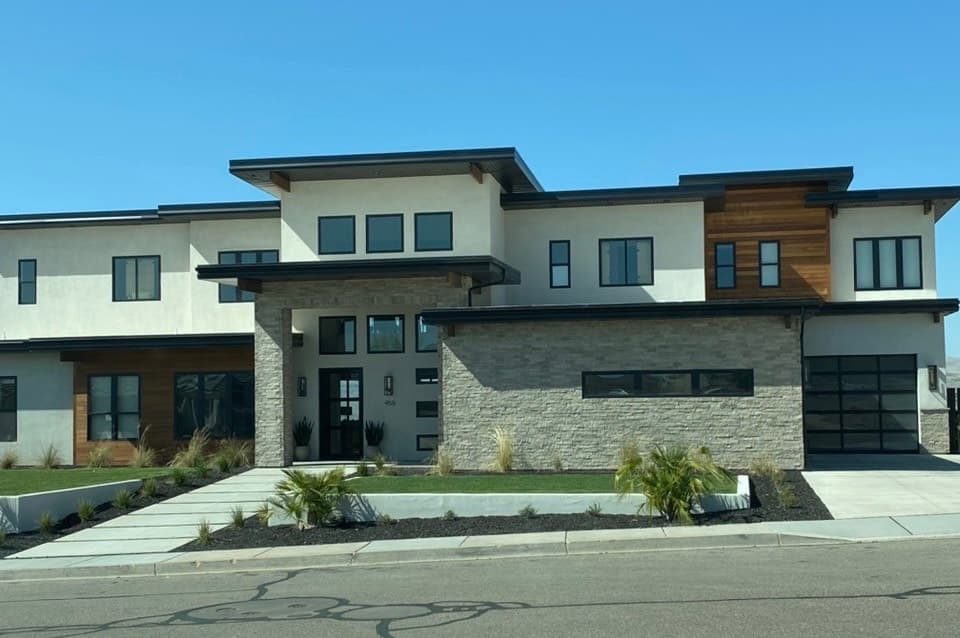
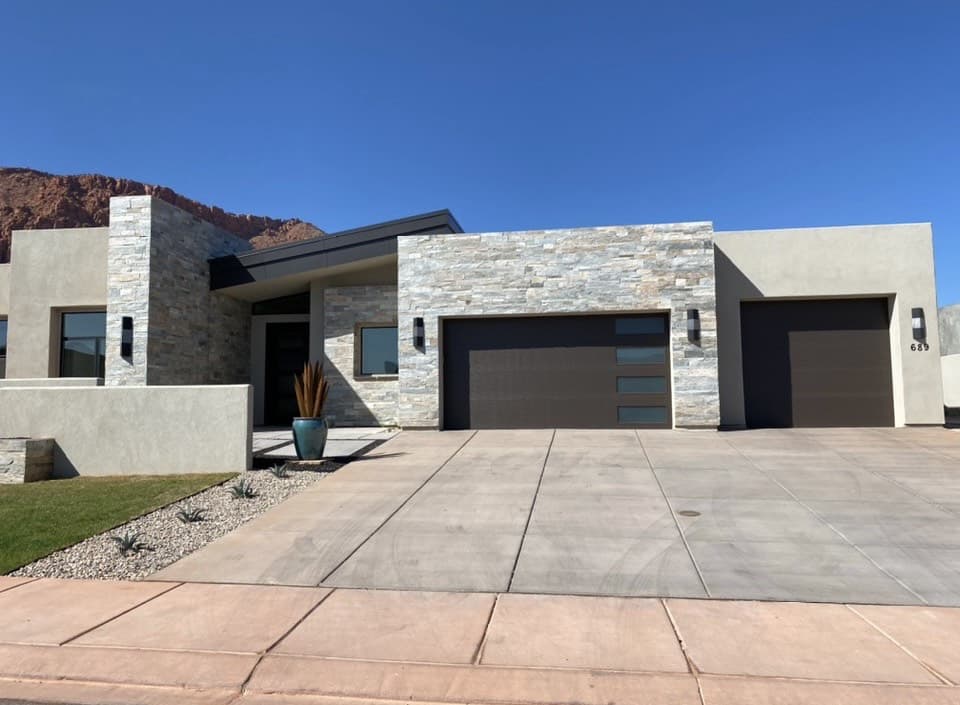
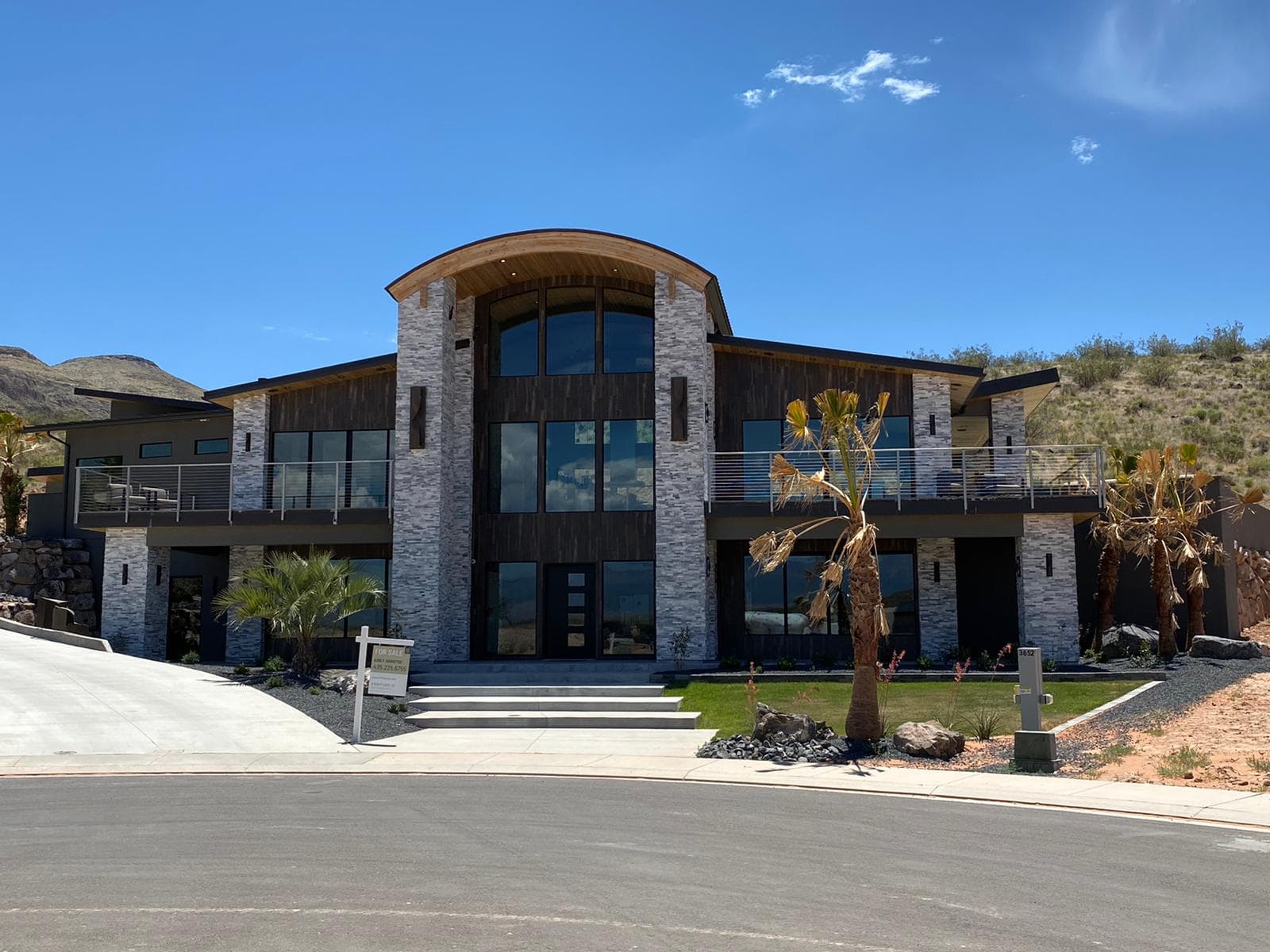
St. George questions
Asked in St. George.
Specific to stone masonry work here, not general questions about working with us.
Why is white powder showing up on my stone veneer in St. George?
That is efflorescence, salt left behind when water travels through the mortar and evaporates at the surface. It is common here because area soils carry gypsum and the water is hard, so there is plenty of dissolved mineral available to deposit. The bloom itself is cosmetic, but it is telling you water is getting into the assembly and finding its way out through the face. Look for sprinklers hitting the wall, a planter holding wet soil against the veneer, or missing flashing above. Clean the bloom if you want, but fix the water source or it comes right back.
Can stone veneer be installed over the existing stucco on a St. George house?
Sometimes, and it depends entirely on what is behind the stucco. Adhered veneer needs a sound substrate, an intact drainage plane, and flashing that accounts for the added thickness. Bonding new stone to old plaster that is delaminating, cracked, or missing a proper weather barrier hides a problem and hangs weight on it. We open a section and look before recommending an approach. Often the cleaner path on a St. George home is removing the plaster in that area, building the assembly correctly, and setting the veneer on a substrate we know.
How far above the ground does stone veneer need to stop?
Far enough that it never sits in soil or standing water, and that clearance is not decorative. Most St. George yards run drip irrigation and rock mulch tight to the house, so it is easy for a landscaper to bury the bottom course a year after the stone went on. Once veneer is in contact with wet soil, moisture wicks up behind it, salts bloom on the face, and the framing behind it stays damp. Keep finish grade below the termination, keep rock from being mounded against the wall, and keep sprinkler heads pointed away from the stone.
Does a stone retaining wall in my St. George yard need a permit?
It comes down to height and what is above it. The residential exemption list covers retaining walls that are not over four feet measured from the bottom of the footing to the top of the wall, and only where the wall is not supporting a surcharge. Anything taller, or anything holding back a slope with a driveway, patio, or second wall above it, gets engineered and permitted. St. George Community Development at 61 South Main Street is the office to ask, and applications run through the CityInspect portal. Measure from the footing, not from the dirt you can see.
Worth reading before you bid it out.
Tell us about your St. George project.
We respond within one business day with a site walk, a sample, or a line-item estimate.
| Response | One business day |
|---|---|
| Hours | Mon-Fri, 8am to 5pm |