
Stucco contractor in Santa Clara.
Three-coat traditional, EIFS, repairs, and custom finishes, applied by hand. Serving homeowners, custom home builders, and general contractors in Santa Clara since 2001.

| County | Washington, UT |
|---|---|
| Trade | Stucco / ST |
| Scopes | 6 |
| Working since | 2001 |
Working in Santa Clara
We know Santa Clara walls.
Santa Clara sits at roughly 2,759 feet, the lowest of the three, in climate zone 3B. What makes plaster work here different is the building stock. The town was settled in 1854 and the Swiss families arrived in 1861, and the Historic District along Santa Clara Drive still holds pioneer-era structures. The city's own historic district design guidelines list adobe masonry walls as the defining wall system of the Utah vernacular buildings here, alongside brick, wood, native stone, and stucco. Adobe and soft historic masonry breathe. Modern portland cement stucco does not, or at least not nearly as well, and a hard cement coat applied over a soft wall traps moisture in the substrate and drives failure behind the plaster instead of on it. On the modern side of town the ground brings its own problem: the Utah Geological Survey specifically documents structures damaged by highly expansive rock buried under more than ten feet of nonexpansive sand and gravel in the Santa Clara Heights area.
We ask what the wall is before we spec the mix. On a historic soft-masonry wall the answer is a lime-based or lime-rich plaster that stays more vapor open and softer than the substrate, so the plaster sacrifices itself rather than the wall. On new work we run conventional three-coat cement stucco with control joints laid out to the field sizes and framing transitions, weep screed set at its required height, and cure held with moisture rather than left to the sun. Where a geotechnical report flags expansive material at depth, we expect movement and place joints accordingly rather than pretending a rigid skin will bridge it.
| Elevation | 2,759 ft |
|---|---|
| Climate zone | 3B |
| Permits | Santa Clara City Building Department |
The Heritage Commission is the design review committee for new construction, exterior design proposals, demolition or relocation of a significant historic building, and signs inside the district. Supporting guidelines call for adobe, brick, wood, native stone and stucco, prohibit fluorescent exterior colors, and advise against painting brick that was never painted.
Utah Geological Survey Special Study 127 documents expansive soil damage in Santa Clara directly, including the Santa Clara Heights area where structures were damaged by highly expansive rock buried under more than ten feet of nonexpansive sand and gravel, so a site can test clean at the surface and still move.
Around town: Jacob Hamblin Home, Swiss settlement core, Santa Clara Heights
Stucco scope
A complete scope.
A finish coat lasts thirty years when the lath spacing, brown coat hydration, and corner detail are right. Most failures aren't about the finish, they start in the layers no one sees.
- 01Traditional 3-coat stucco
- 02EIFS systems
- 03Stucco repairs and matching
- 04Custom finishes & textures
- 05Color coat application
- 06Foam shapes & cornices
Other trades in Santa Clara
Three more trades, all in-house.
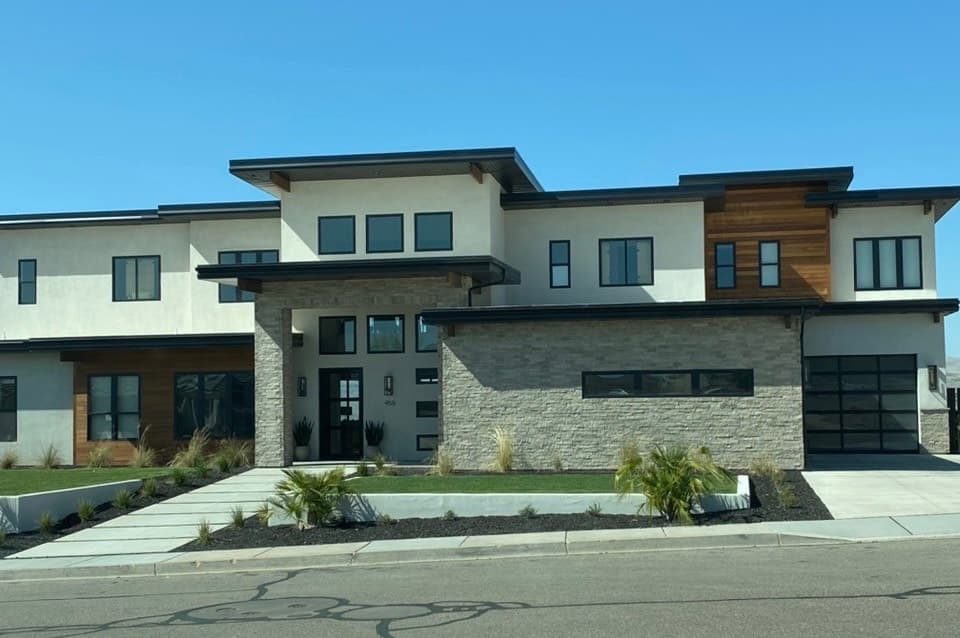
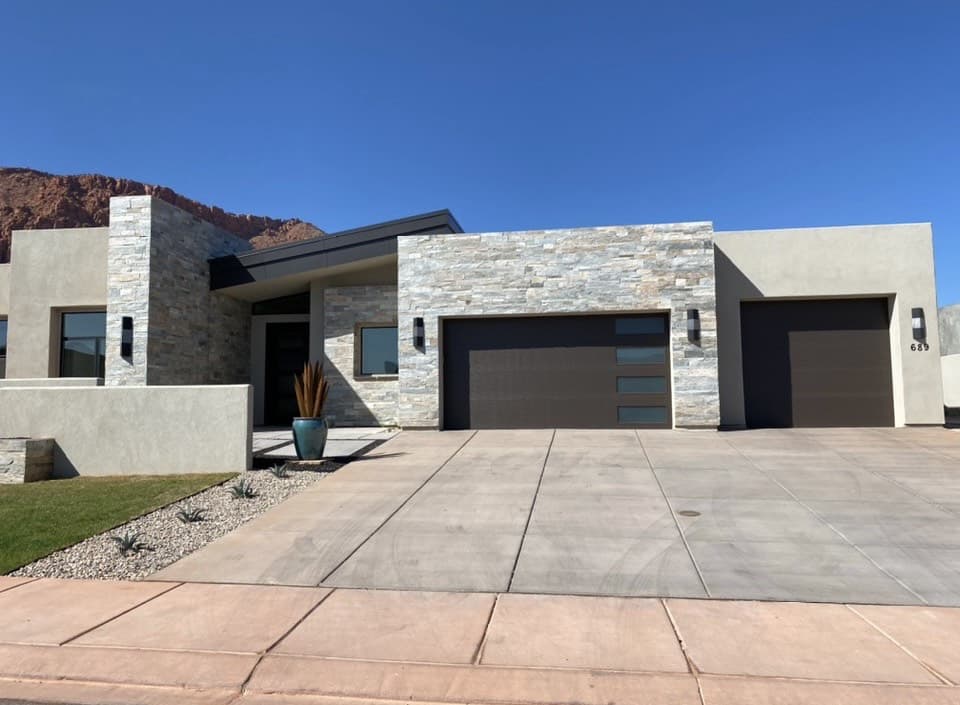
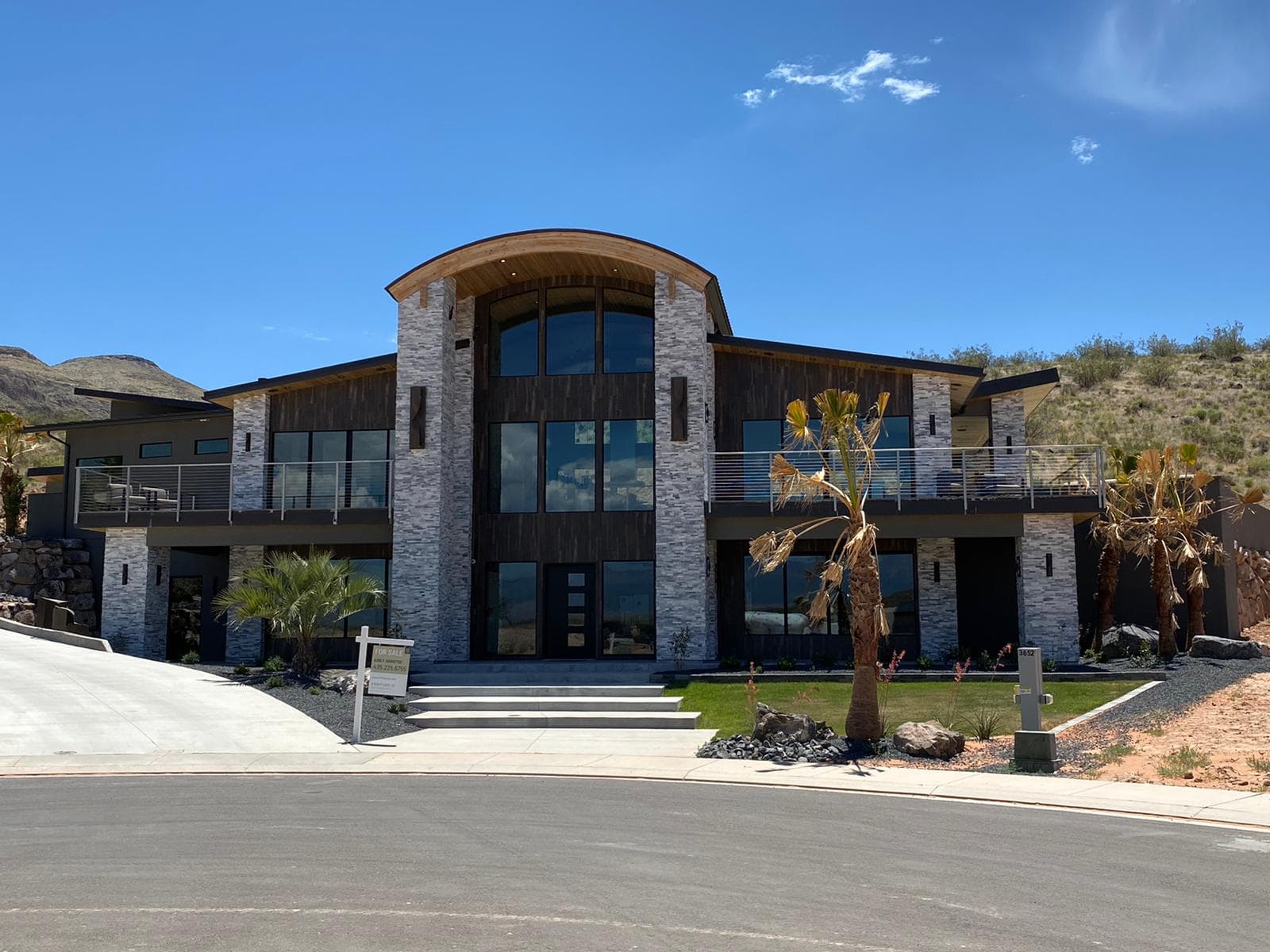
Santa Clara questions
Asked in Santa Clara.
Specific to stucco work here, not general questions about working with us.
Can you match the plaster on an old Santa Clara adobe or sandstone building?
Matching means three things: composition, texture, and color, in that order. We look at what is actually on the wall, since a pioneer-era building here may have soft lime plaster over adobe or over native stone, and we work up a mix that is no harder than the original. Texture gets matched by making sample panels next to the existing work and adjusting the float and the aggregate until it reads the same from a normal viewing distance. Color comes last. We do not use a modern cement mix to patch a soft historic wall.
Does the Santa Clara Historic District overlay affect stucco work on my house?
It can. Santa Clara has a local Historic District overlay in Chapter 17.76 of the city zoning code, and the Heritage Commission acts as the design review committee for new construction, exterior design proposals, demolition or relocation of a significant historic building, and signs within the district. The city's supporting design guidelines call for materials that were employed in the district, listing adobe, brick, wood, native stone, and stucco, and generally discourage imitation, synthetic, and modern materials. If your property is inside the overlay, check with the city before finalizing an exterior finish.
Why is modern cement stucco a bad idea over historic adobe?
Because it is stronger and less permeable than the wall behind it. Adobe absorbs and releases moisture. Put a hard, relatively vapor-closed cement coat over it and the moisture that used to leave through the face now sits at the interface, softening the adobe and eventually pushing the plaster off in sheets, taking a layer of the original wall with it. Lime plaster is the traditional answer for a reason: it is softer than the substrate, it lets vapor through, and when it fails it fails on the surface where it is easy to fix.
Who issues the building permit for exterior work in Santa Clara?
Santa Clara City runs its own Building Department, separate from Washington County, and permits are applied for through the city's online portal. The department can tell you whether your specific scope needs a permit, since that depends on whether structural, electrical, plumbing, or mechanical work is involved. If the property is in the Historic District overlay, treat the Heritage Commission design review as a separate track that may need to happen alongside or before the permit. We will coordinate with the city on scheduling either way.
Worth reading before you bid it out.
Tell us about your Santa Clara project.
We respond within one business day with a site walk, a sample, or a line-item estimate.
| Response | One business day |
|---|---|
| Hours | Mon-Fri, 8am to 5pm |