
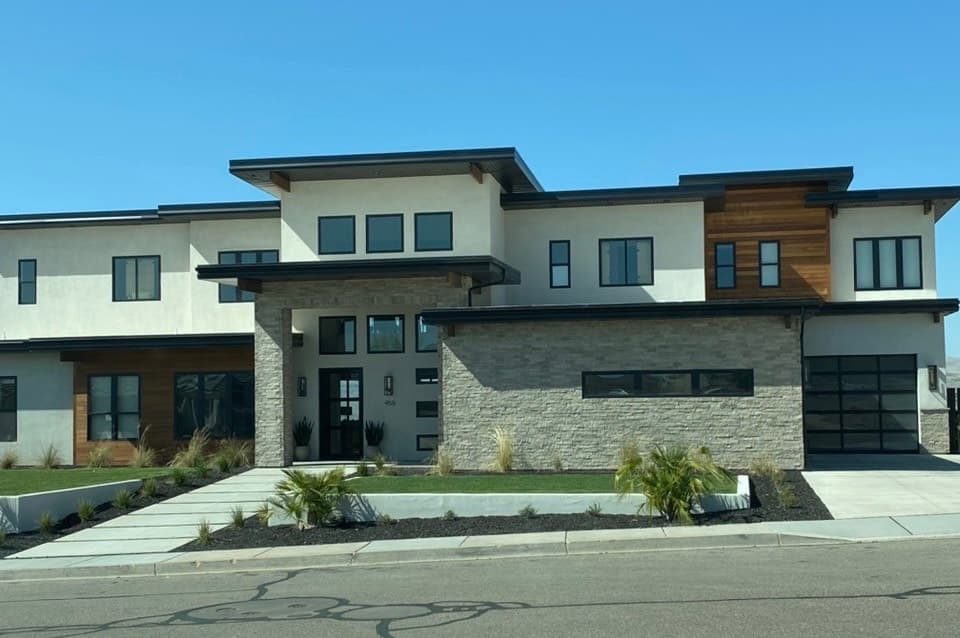
We are a subcontractor. D&D Plastering runs stucco, stone, drywall, and painting crews, and most of our work comes through general contractors and home builders across Southern Utah. But homeowners also hire us directly all the time, and one of the most common questions we get is whether that is allowed, smart, or both. The honest answer: sometimes hiring a sub directly is exactly right, and sometimes we are the first ones to tell a homeowner to go find a general contractor.
Start with what each role actually is. A general contractor manages a whole project: they hold the prime contract, pull the permits, sequence the trades, and take responsibility for the finished result. A specialty subcontractor is an expert in one trade. We know stucco, stone veneer, drywall, and paint at a depth a GC never will, because it is all we do. The GC's value is coordination. The sub's value is craft.
When your project is a single trade, hiring the specialist directly usually makes sense. A stucco recoat or color coat refresh, patching and matching stucco after a window replacement, a drywall repair from a plumbing leak, retexturing a ceiling, a full interior or exterior repaint, or adding stone veneer to an existing fireplace or entry: these are one-trade scopes. Bringing a GC into a job like that adds a management layer, and a markup, for coordination that is not really needed.
The direct relationship is simple. You call us, we look at the project, we give you a written scope and quote, and our crew does the work under our license and insurance. You get one point of contact who actually understands the trade, and questions get answered by the people doing the work. For homeowners in St. George, Washington, Hurricane, and the surrounding towns, that is how a large share of our residential repair and repaint work happens.
Licensing is worth understanding at a high level. Utah licenses contractors through the Division of Professional Licensing, and specialty contractors like us hold classifications for the specific trades we perform. That means a licensed sub can legally contract directly with a homeowner for work within their classification. What a specialty sub cannot do is act as the general contractor on a project that requires one, and a good sub will not pretend otherwise.
There are also small-job exemptions in Utah where a handyman can legally work unlicensed under a certain dollar threshold, but anything substantial, and certainly anything structural or permitted, belongs with licensed contractors. Whoever you hire, sub or GC, verify the license on the state's public lookup and ask for their certificate of insurance. It takes two minutes and it filters out most of the horror stories.
So when do you need a GC? First, whenever the project involves structural work: removing or modifying walls, foundation repairs, additions, anything where an engineer or a building permit that spans trades enters the picture. Second, whenever multiple trades have to be coordinated in sequence. A kitchen remodel touches demolition, framing, electrical, plumbing, drywall, paint, cabinets, and flooring, and someone has to own the schedule, the inspections, and the seams between trades. That someone should be a general contractor, not the homeowner learning on the fly, and not one of the subs moonlighting as a manager.
Third, whenever the finish problem is actually a symptom. This one comes from experience. A homeowner calls us about cracking stucco, and when we look at it, the cracking traces back to a settling foundation or a framing issue. Painting or patching over that would take their money and solve nothing. In those cases we say so, plainly, and point them toward getting a GC or the right specialist involved first. We would rather lose a small job than do work we know will fail.
A rough test you can apply yourself: if you can describe the whole project in one sentence about one surface, it is probably a direct-to-sub job. If describing it requires the words and then, as in replace the wall and then rewire and then drywall and then paint, you are describing coordination, and coordination is a GC's product.
Permits deserve a word too. Plenty of single-trade work, like repainting or minor drywall repair, needs no permit at all. Some scopes do, and rules vary between jurisdictions like St. George, Washington County, and Cedar City. When a permit applies to a single-trade scope we perform, that gets sorted before work starts. When the permit spans multiple trades, that is another sign the project needs a general.
One more thing homeowners worry about: whether going direct to a sub offends the GCs we work for. It does not. Builders hire us for new construction and large projects, homeowners hire us for repairs, recoats, and repaints, and those have been parallel lanes for the two decades we have been working in Southern Utah. The builders we work with would give you the same advice we just did.
If you are not sure which side of the line your project falls on, that is a fine reason to call. We will look at it, tell you honestly whether it is a job for us or a job for a general contractor, and either quote it or point you in the right direction. Either way you leave the conversation knowing what your project actually needs.
Can a homeowner hire a subcontractor directly in Utah?
Yes. A licensed specialty contractor can contract directly with a homeowner for work within their license classification, such as stucco, drywall, or painting. The homeowner then holds the contract directly with that company rather than going through a general contractor. Verify the license on Utah's public contractor lookup before signing anything.
Do I need a general contractor for a remodel?
If the remodel involves structural changes or several coordinated trades, yes. Someone has to own permits, inspections, scheduling, and the handoffs between trades, and that is the general contractor's job. For a single-trade scope like a repaint, a drywall repair, or a stucco recoat, hiring the specialty contractor directly is usually simpler and more efficient.
What is the difference between a general contractor and a subcontractor?
A general contractor manages the overall project and hires and coordinates the trades. A subcontractor performs one trade at a specialist level, like stucco, stone, drywall, or painting. On a new home the builder or GC hires the subs; on a small single-trade project a homeowner can skip the middle layer and hire the sub directly.