
Stone Masonry contractor in Santa Clara.
Dry-stack, ledger, and natural veneer, set by masons, not pieceworkers. Serving homeowners, custom home builders, and general contractors in Santa Clara since 2001.

| County | Washington, UT |
|---|---|
| Trade | Stone Masonry / SM |
| Scopes | 6 |
| Working since | 2001 |
Working in Santa Clara
We know Santa Clara walls.
Santa Clara has real historic stonework, not a stone-look aesthetic. The Jacob Hamblin Home, built in 1862 to 1863, is sandstone quarried from hills near the site and laid by stone masons from Cedar City. The Hans George Hafen House, from 1862, is adobe on a stone foundation. The city's historic district guidelines list native stone among the materials employed in the district. Old stonework here fails for old-stone reasons. The original mortar was soft and lime-based, which let the wall move slightly and let moisture escape through the joint rather than through the face of the stone. Repointing that wall with a hard modern portland mortar reverses the relationship: the joint becomes stronger than the sandstone, and the stone starts spalling instead. At the base of a wall, rising damp plus salts from the soil concentrates the damage in the lowest few courses. New veneer work in Santa Clara faces a different issue, the same expansive rock at depth the Utah Geological Survey documents in the Santa Clara Heights area.
On historic walls we test what is there before we touch it, and we repoint with a mortar softer than the stone, raking joints by hand rather than grinding them, so the arris of the sandstone survives the repair. Joint profile and color get matched to surviving original work rather than to a bag spec. We do not seal historic stone. On new veneer we build the full assembly: weather resistive barrier, lath, scratch coat, packed and tooled joints, a working weep, and clearance above finished grade. Where soils reports flag movement, joint layout and lintel detailing account for it.
| Elevation | 2,759 ft |
|---|---|
| Climate zone | 3B |
| Permits | Santa Clara City Building Department |
The Heritage Commission is the design review committee for new construction, exterior design proposals, demolition or relocation of a significant historic building, and signs inside the district. Supporting guidelines call for adobe, brick, wood, native stone and stucco, prohibit fluorescent exterior colors, and advise against painting brick that was never painted.
Utah Geological Survey Special Study 127 documents expansive soil damage in Santa Clara directly, including the Santa Clara Heights area where structures were damaged by highly expansive rock buried under more than ten feet of nonexpansive sand and gravel, so a site can test clean at the surface and still move.
Around town: Jacob Hamblin Home, Swiss settlement core, Santa Clara Heights
Other trades in Santa Clara
Three more trades, all in-house.
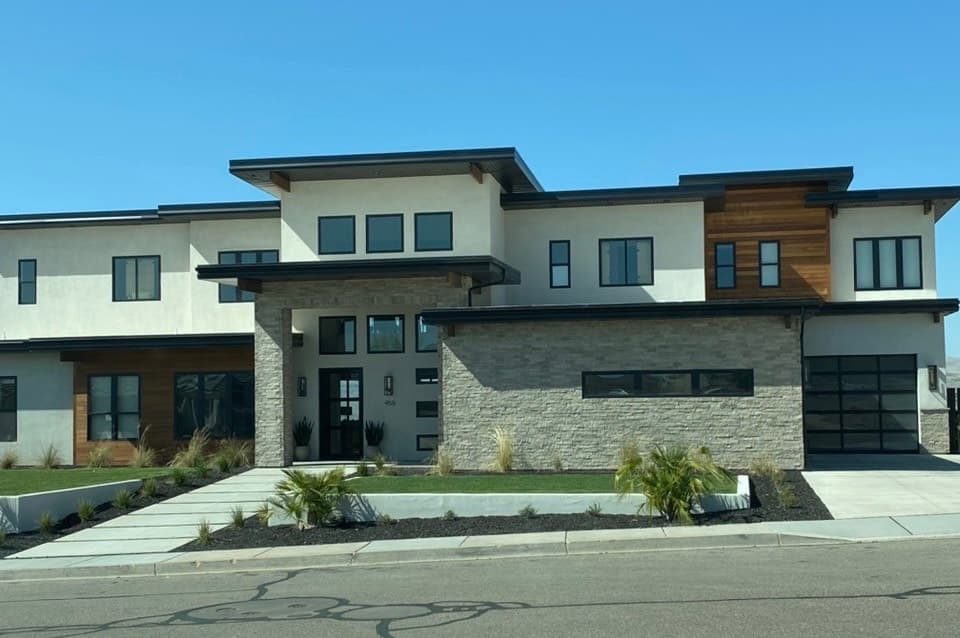
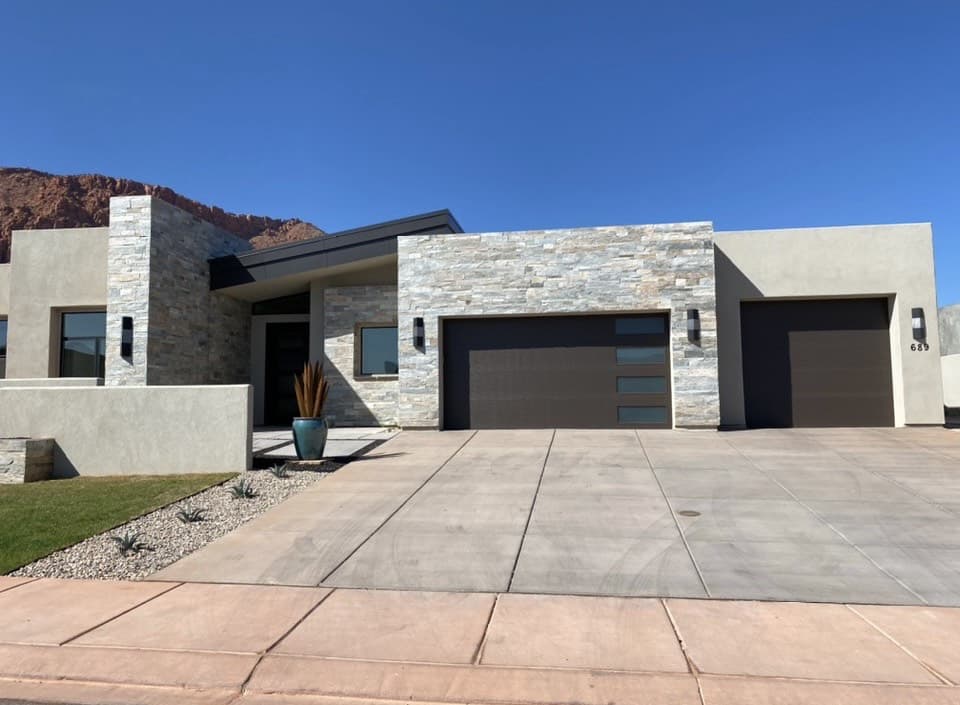
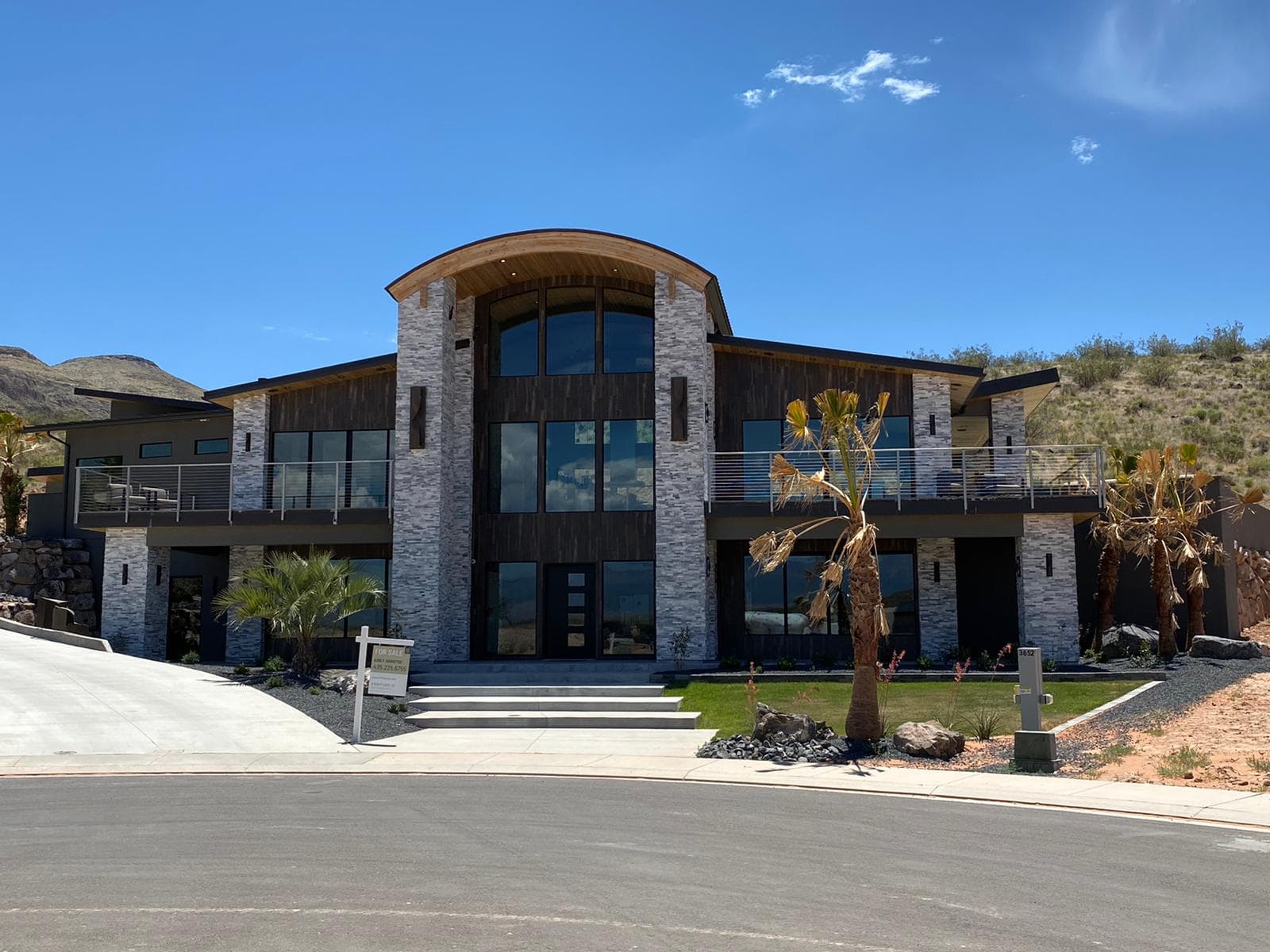
Stone Masonry scope
A complete scope.
Stone is a sculpture problem, not a coverage problem. We start with the corners and work inward. The wall reads as one composition because someone composed it.
- 01Natural stone veneer
- 02Manufactured stone
- 03Ledger and dry-stack
- 04Hearths & fireplaces
- 05Boulder & rubble walls
- 06Stone repair and re-pointing
Santa Clara questions
Asked in Santa Clara.
Specific to stone masonry work here, not general questions about working with us.
Can you match the native sandstone used in Santa Clara's pioneer buildings?
We work with regional sandstone and match by color, bed thickness, and coursing pattern rather than claiming an exact geological match, because the original stone came out of specific hillsides nearby that are not open quarries today. In practice the eye reads coursing and joint width before it reads mineralogy. We build a sample panel, look at it next to the original in daylight, and adjust. If the goal is a repair on an existing historic wall, salvaged stone from the same building is always the first thing we look for.
What mortar do you use on old Santa Clara stonework?
Something softer than the stone. Historic sandstone walls here were built with lime-based mortar that flexes slightly, breathes, and gives up salts and moisture through the joint. A modern high-cement mortar is harder and less permeable than the sandstone, so moisture and salt exit through the stone face instead and the stone spalls. We match the original by look and by hardness, usually a lime-rich mix, and we accept that it will need attention again in decades. That is the intended behavior, not a shortcut.
Does the Heritage Commission review stone or masonry changes?
Within the Historic District overlay, yes, for the scopes the ordinance names. Santa Clara Municipal Code Chapter 17.76 makes the Heritage Commission the historic district design review committee for new construction excluding minor additions, exterior design proposals, demolition or relocation of a significant historic building, and signs inside the district. Since masonry is an exterior design element, a substantial change to a stone facade in the district is worth taking to the city early. Routine maintenance repointing is a different conversation, but ask before you assume.
Why is my old Santa Clara stone wall shedding mortar at the base?
Almost always rising damp carrying dissolved salts. Groundwater and irrigation moisture wick up through the base of a wall, evaporate a foot or two above grade, and leave salt crystals behind in the joint. Those crystals expand as they grow and push the mortar apart. You will often see a horizontal band of damage rather than random spots. Repointing alone does not solve it. The lasting fix is reducing the water: regrade so soil slopes away, move irrigation and downspouts off the wall, then repoint with a soft, breathable mortar.
Worth reading before you bid it out.
Tell us about your Santa Clara project.
We respond within one business day with a site walk, a sample, or a line-item estimate.
| Response | One business day |
|---|---|
| Hours | Mon-Fri, 8am to 5pm |