
Stone Masonry contractor in Washington.
Dry-stack, ledger, and natural veneer, set by masons, not pieceworkers. Serving homeowners, custom home builders, and general contractors in Washington since 2001.

| County | Washington, UT |
|---|---|
| Trade | Stone Masonry / SM |
| Scopes | 6 |
| Working since | 2001 |
Working in Washington
We know Washington walls.
Washington City has far more slope lots than the flat communities down valley, so stone here is often doing structural work rather than decorative work. Coral Canyon and Green Springs sit on rising ground where pads are cut and filled and retaining walls hold the difference. Behind those walls is the same material the whole area deals with. The Utah Geological Survey maps expansive soil and rock, collapsible soil, and gypsiferous soil and rock across the St. George and Hurricane area, and clay that swells is the worst thing you can put behind a retaining wall. Wet clay pushes with real force, and it does not push evenly. Down in Long Valley and Washington Fields, on old farm ground, the problem flips: a slab and footing move under a rigid veneer, and mortar joints crack before anything else gives.
On retaining work we build the drainage before the face. Free draining backfill goes against the wall instead of native clay, a perforated drain sits at the base with a real outlet that daylights, and weeps run through the face so water has a path out. Expansive native material gets hauled somewhere else. On veneer over framing we keep the drainage plane continuous, flash every horizontal break, and hold the bottom course clear of grade. Where a wall steps down a Coral Canyon slope we run the joint pattern to the steps, so a movement crack lands in a joint instead of splitting a stone.
| Elevation | 2,894 ft |
|---|---|
| Climate zone | 3B |
| Permits | Washington City Building Department, 111 N 100 E |
Written approval is required before exterior alterations, including repainting. Some colors can be approved from a pre-approved list, but a design review form is still submitted.
The Utah Geological Survey maps expansive soil and rock, collapsible soil, and gypsiferous soil and rock across Washington City, including the former farm ground of Washington Fields underlain by Chinle blue clay.
Around town: Washington Fields, Coral Canyon, Sienna Hills, Green Springs
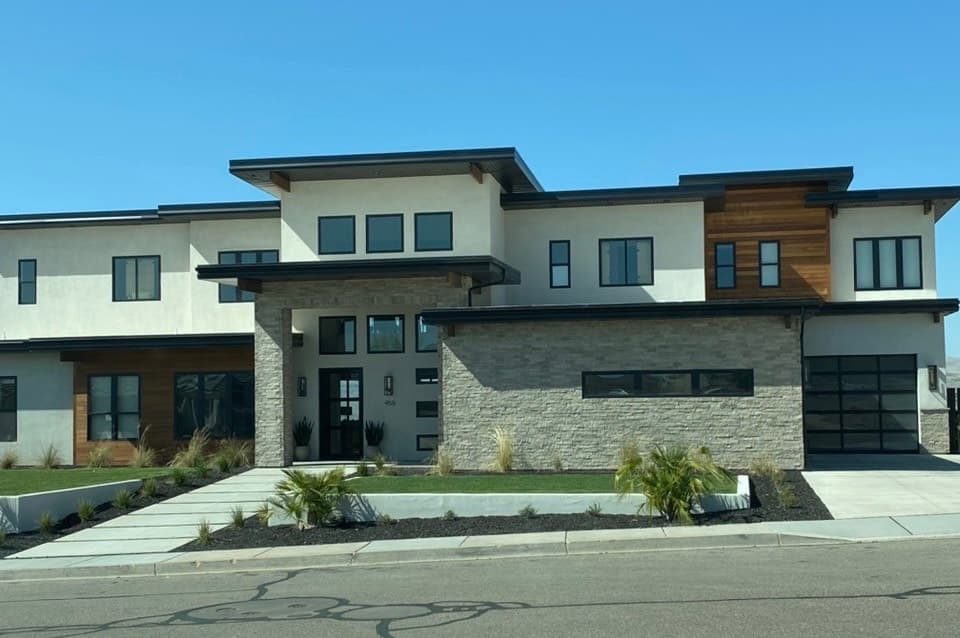
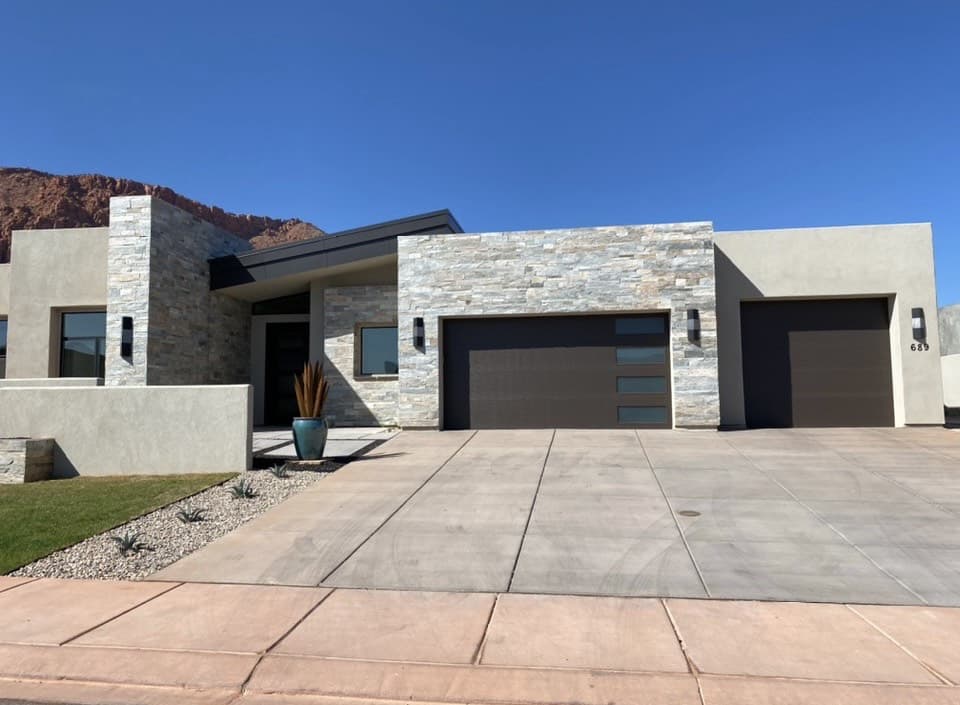
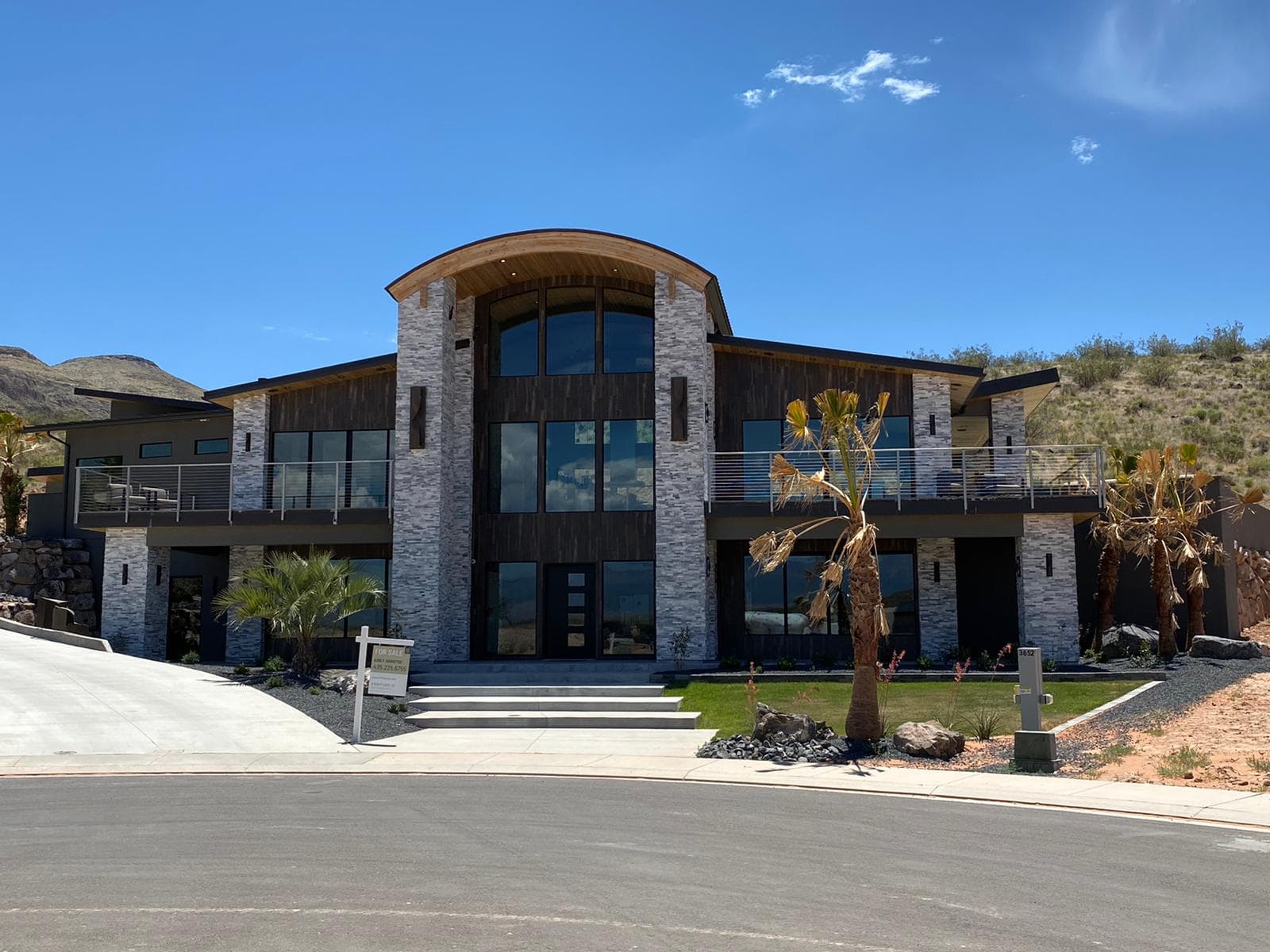
Stone Masonry scope
A complete scope.
Stone is a sculpture problem, not a coverage problem. We start with the corners and work inward. The wall reads as one composition because someone composed it.
- 01Natural stone veneer
- 02Manufactured stone
- 03Ledger and dry-stack
- 04Hearths & fireplaces
- 05Boulder & rubble walls
- 06Stone repair and re-pointing
Other trades in Washington
Three more trades, all in-house.
Washington questions
Asked in Washington.
Specific to stone masonry work here, not general questions about working with us.
Do I need a permit for a retaining wall on a Washington City slope lot?
Height and load decide it. The residential exemption list stops at retaining walls not over four feet from the bottom of the footing to the top of the wall, and only where nothing is surcharging the wall. On a Coral Canyon or Green Springs cut lot, walls frequently exceed that or carry a driveway, patio, or a second wall above them, which puts you into engineering and a permit. Washington City's building department at 111 North 100 East handles it, and the number is 435-656-6326. Ask before you order stone, not after it is stacked in the driveway.
Why do the mortar joints on my Washington Fields stone crack when the stone itself is fine?
Because mortar is the most brittle part of the assembly, so it fails first and tells you the wall moved. Under Washington Fields the expansive clay takes on water from irrigation and roof runoff, swells, then shrinks through the dry stretch, and the footing follows it. Stone units survive that easily. The joints between them do not. Repointing on its own lasts about until the next wet season. Get water away from the foundation first, watch whether the crack keeps growing through a full year, then repoint once the movement has actually settled.
Will Coral Canyon approve adding stone accents to a house that does not have any?
You have to ask, and you have to ask first. The Coral Canyon Community Association requires a design review application and written approval before any exterior alteration, and adding a new material to an elevation is exactly what the committee reviews. They keep design guidelines available to owners, so read those before you pick a stone. Submitting a drawing that shows where the veneer starts and stops, and how it terminates at corners and openings, gets a cleaner answer than handing over a photo of a house you liked online.
What keeps a stone wall on a Green Springs slope from bulging over time?
Drainage and backfill, in that order. A bulging wall is nearly always a wall holding water. Green Springs pads are cut into rising ground, and if native clay goes back in behind the wall it swells every time it gets wet and pushes on the face. Gravel backfill, a drain line at the base that genuinely daylights, and weeps through the face let that pressure out. Above the wall, grade the surface so runoff sheds away instead of soaking in at the top. A good looking face on a wet wall still leans eventually.
Worth reading before you bid it out.
Tell us about your Washington project.
We respond within one business day with a site walk, a sample, or a line-item estimate.
| Response | One business day |
|---|---|
| Hours | Mon-Fri, 8am to 5pm |