
Stone Masonry contractor in Cedar City.
Dry-stack, ledger, and natural veneer, set by masons, not pieceworkers. Serving homeowners, custom home builders, and general contractors in Cedar City since 2001.

| County | Iron, UT |
|---|---|
| Trade | Stone Masonry / SM |
| Scopes | 6 |
| Working since | 2001 |
Working in Cedar City
We know Cedar City walls.
Stone veneer at 5,800 feet in Cedar City faces a problem the Washington County valley floor mostly does not: sustained freeze-thaw. The Western Regional Climate Center summary for the Cedar City station shows roughly 145 days a year with a minimum at or below freezing, and in a high desert at this elevation a sunny winter day thaws a south wall and the night refreezes it. Every one of those cycles is a chance for water sitting in the mortar, in the stone, or behind the veneer to expand and break something. Iron County is climate zone 5B, so this is a heating-dominated climate with real snow, which means snowmelt sitting against the base of a wall for weeks and ice building at eaves and in valleys. Porous stone that absorbs a lot of water is the wrong material here even though it performs fine two thousand feet lower. Cedar Valley soils add settlement risk, with the Utah Geological Survey naming collapsible soils among the costliest hazards in the valley.
We pick stone for absorption, not just for looks, favoring dense, low-porosity material on exposures that will hold snow. The assembly gets built to drain: weather resistive barrier, lath, scratch coat, fully packed and tooled joints, functioning weep, and a generous clearance above finished grade so snow piled against the house is not sitting on the masonry. Mortar is placed above the manufacturer's minimum temperature and protected from freezing while it sets. Cold-weather work gets tented and heated or it waits. Cap flashing on wall tops matters more here than anywhere else we work.
| Elevation | 5,800 ft |
|---|---|
| Climate zone | 5B |
| Permits | Cedar City Corporation Building and Zoning |
The Utah Geological Survey states collapsible soils and flooding have historically been the costliest hazards in Cedar Valley, and separately documents about 100 square miles of land subsidence and at least 8.3 miles of earth fissures from groundwater withdrawal.
Around town: SUU historic district, Utah Shakespeare Festival, Cedar Breaks
Other trades in Cedar City
Three more trades, all in-house.
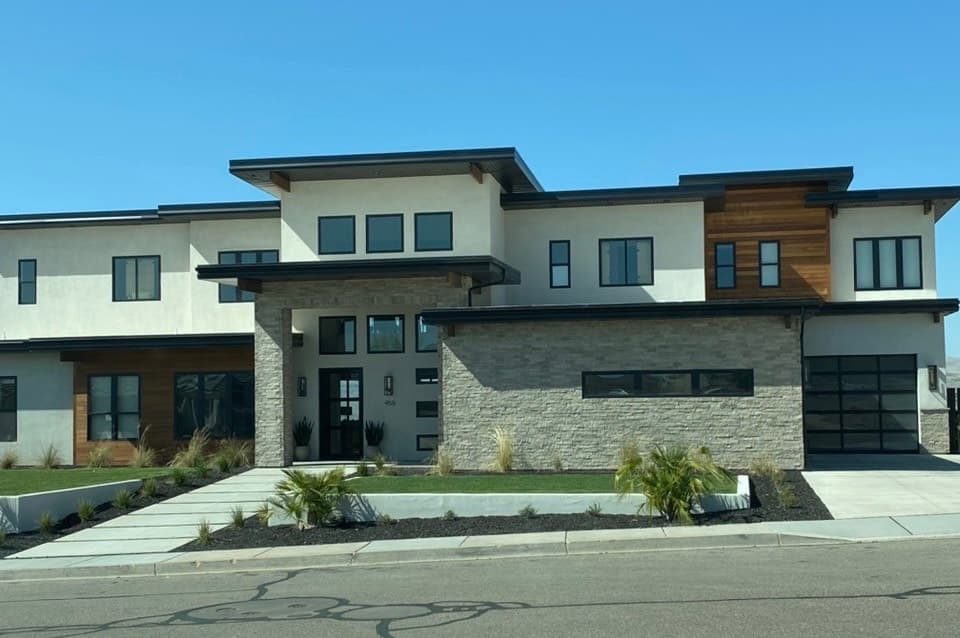
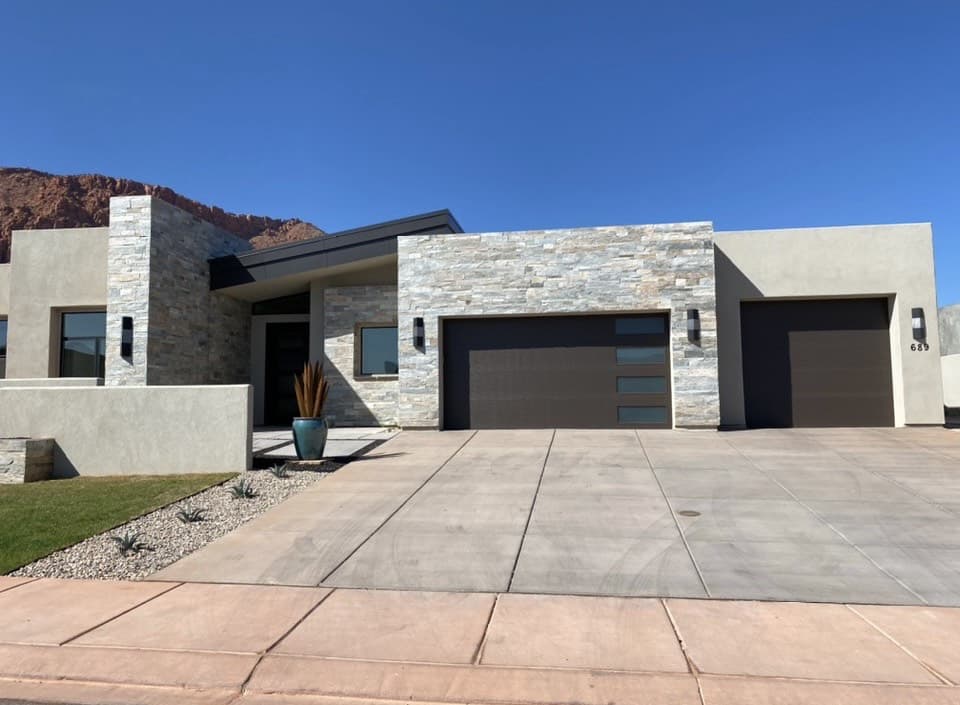
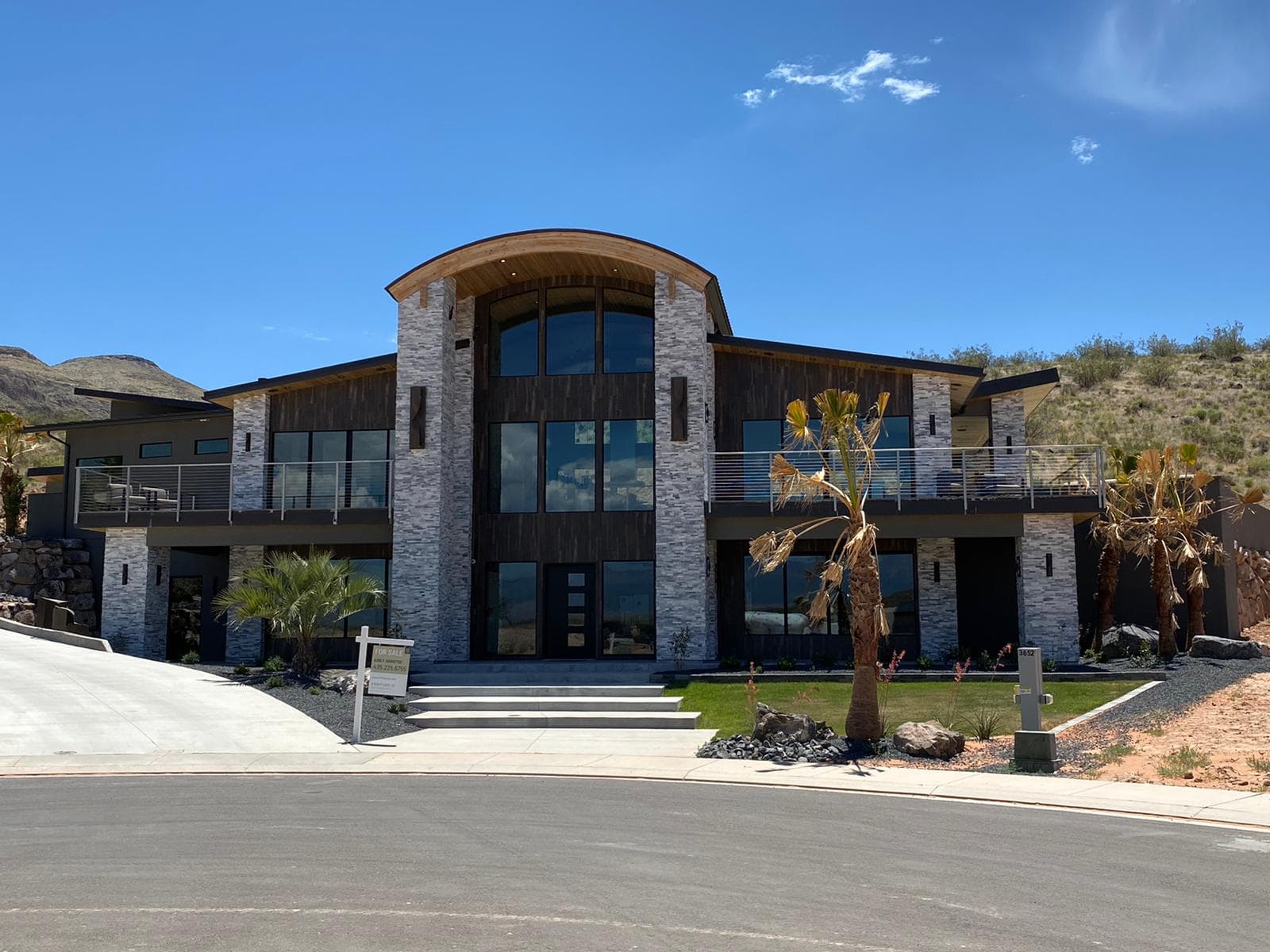
Stone Masonry scope
A complete scope.
Stone is a sculpture problem, not a coverage problem. We start with the corners and work inward. The wall reads as one composition because someone composed it.
- 01Natural stone veneer
- 02Manufactured stone
- 03Ledger and dry-stack
- 04Hearths & fireplaces
- 05Boulder & rubble walls
- 06Stone repair and re-pointing
Cedar City questions
Asked in Cedar City.
Specific to stone masonry work here, not general questions about working with us.
Does freeze-thaw really damage stone veneer in Cedar City?
Yes, and it is the main reason veneer fails at this elevation. With roughly 145 freezing days a year and strong winter sun, a south-facing wall can cross the freezing line twice in a single day. Water held in a porous stone or in a partially filled mortar joint expands about nine percent when it freezes, and repeating that hundreds of times per winter breaks the bond and spalls the face. Dense stone, full joints, and a wall that drains are what stop it. A surface sealer is not a substitute for any of those.
Can you set stone in Cedar City in the winter?
Only with real protection. Mortar gains strength through cement hydration, which slows sharply as temperatures drop and stops near freezing, and mortar that freezes before it sets is permanently weakened. Cedar City averages around 27 freezing nights in each of December and January. Working through that means a heated enclosure with heat maintained continuously for the full protection period, not just during working hours. It is achievable on a commercial schedule. For most homes the practical answer is to wait for a stable spring window.
What stone holds up best at Cedar City's elevation?
The relevant property is water absorption. Dense stone such as granite and hard, tight-bedded sandstone or quartzite takes on less water, so there is less water in it to freeze. Soft, highly porous sandstone and some manufactured products absorb more and are the ones that spall after a few winters on an exposed elevation. Orientation matters too: a wall that holds snow at its base or sits under an ice-prone eave takes far more cycles than a sheltered one. We match stone to exposure rather than using one product all the way around a house.
Why does the mortar on my Cedar City chimney crumble?
A chimney is the most exposed masonry on the house. It stands above the roofline with weather on all four sides, it has no eave protecting it, and the crown at the top is often cracked, which lets water straight into the stack. Add roughly 145 freezing days a year and that water cycles constantly. The repair sequence is crown first, then flashing at the roof intersection, then repointing, because repointing a chimney that is still taking water in through the top is money spent twice.
Worth reading before you bid it out.
Tell us about your Cedar City project.
We respond within one business day with a site walk, a sample, or a line-item estimate.
| Response | One business day |
|---|---|
| Hours | Mon-Fri, 8am to 5pm |