
Drywall contractor in Hurricane.
Hang, tape, and finish to Level 5, the surface your paint and light deserve. Serving homeowners, custom home builders, and general contractors in Hurricane since 2001.

| County | Washington, UT |
|---|---|
| Trade | Drywall / DW |
| Scopes | 6 |
| Working since | 2001 |
Working in Hurricane
We know Hurricane walls.
Hurricane's higher position, near 3,258 feet, brings a wider daily temperature swing and colder winters than the basin, and interior finishes feel that at the building envelope. Ceilings under vented attics take the biggest swing. In winter a roof truss can arch upward as its top and bottom chords change moisture content at different rates, lifting ceiling drywall away from interior partitions and opening a clean line where ceiling meets wall. It closes again in summer. Separately, a lot of Hurricane's building stock includes shops, garages, and casitas that are only partly conditioned, so board in them cycles through a much wider humidity range than board inside a house does. Add the fine wind blown sand common out toward Sand Hollow, which finds every unsealed gap, and air sealing becomes part of a finish job here rather than someone else's problem.
Where truss uplift is the cause we stop fighting it and detail for it: float the ceiling to wall joint with corner bead fastened to the ceiling only, or run a trim detail that lets the joint move without tearing, instead of another bead of caulk every winter. Board in unconditioned shops and garages gets fasteners on a tighter pattern and a finish that tolerates humidity swings. On any exterior wall we make sure top plates and penetrations are sealed before the board goes up, because the sand here will show you exactly where the air leaks are.
| Elevation | 3,258 ft |
|---|---|
| Climate zone | 3B |
| Permits | Hurricane City Building Department, 147 N 870 W |
Utah Geological Survey Special Study 127 maps surface fault rupture along the Hurricane fault plus expansive soil, collapsible soil, gypsiferous soil and rock, and wind-blown sand across the Hurricane area.
Around town: Sand Hollow, Copper Rock, historic downtown grid
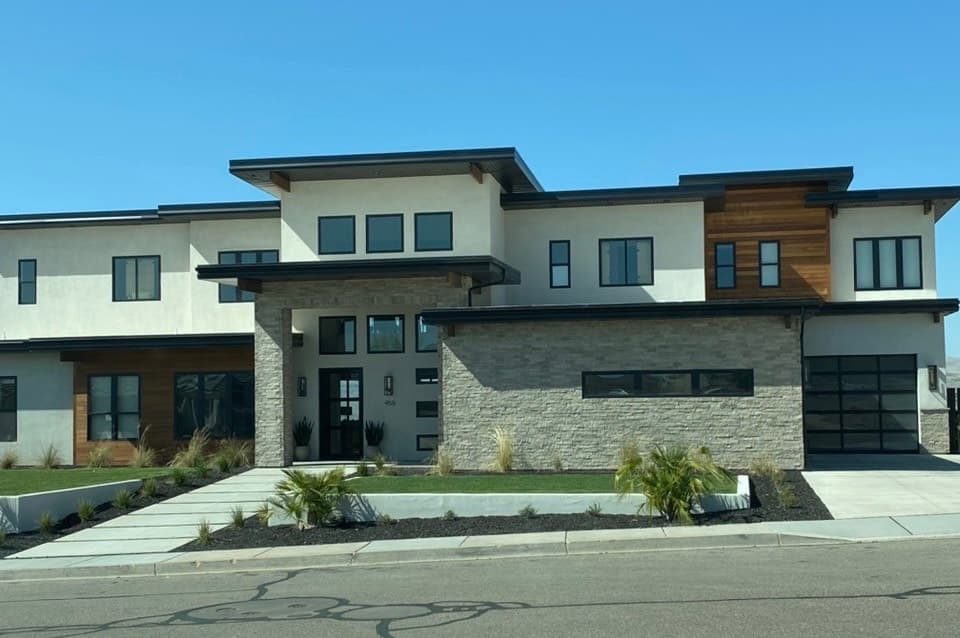
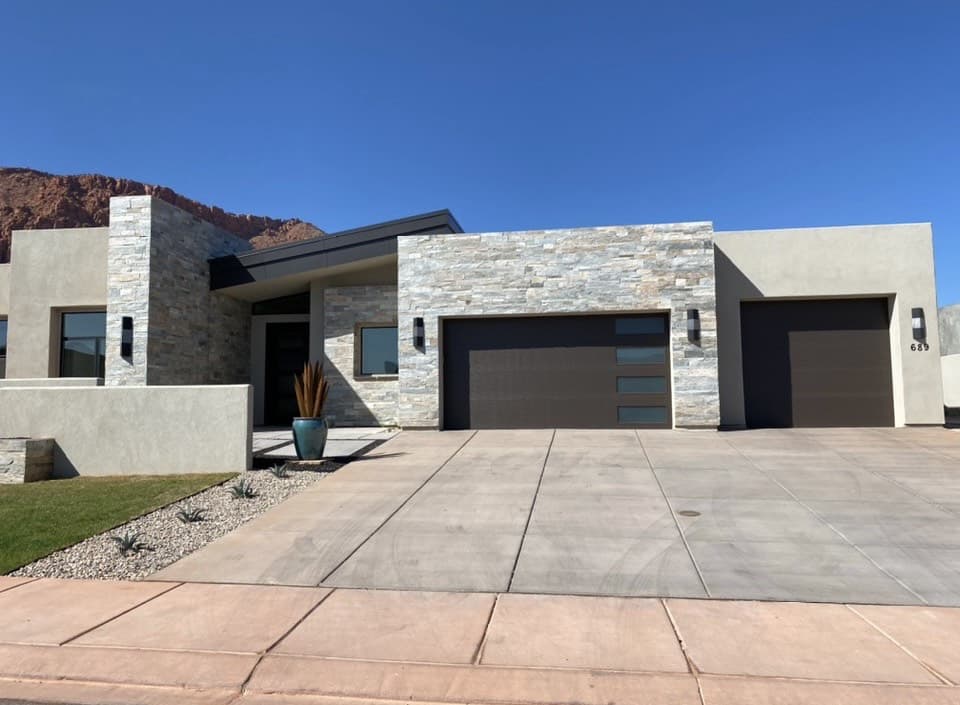
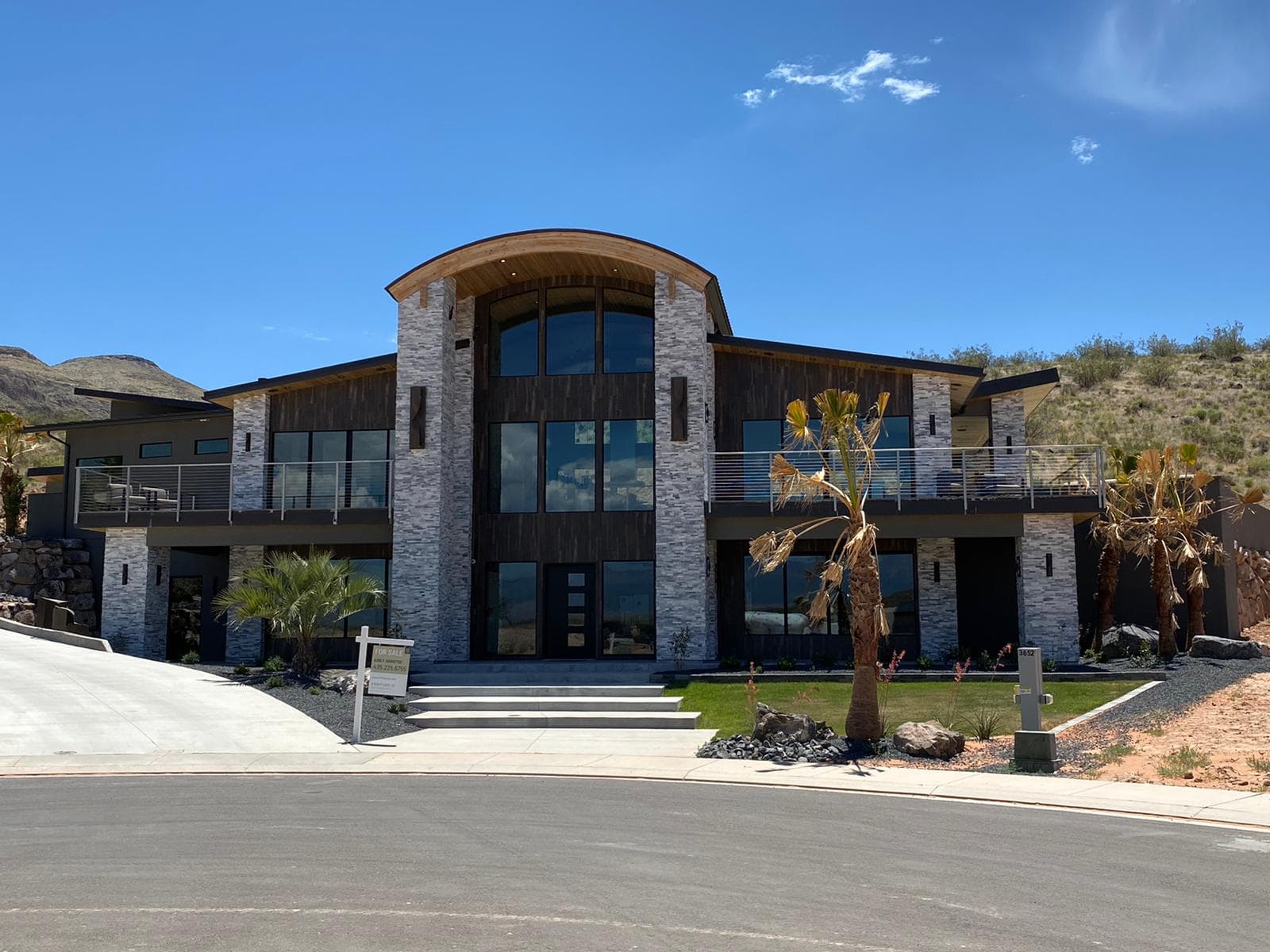
Drywall scope
A complete scope.
Side-light reveals every flat-tape joint. We finish under raking work-lights so we see what your morning sun will see in the finished room.
- 01Hang and finish
- 02Level 5 finishing
- 03Acoustical assemblies
- 04Curved & coved details
- 05Patches & repairs
- 06Steel stud framing
Other trades in Hurricane
Three more trades, all in-house.
Hurricane questions
Asked in Hurricane.
Specific to drywall work here, not general questions about working with us.
Why does a gap open where my Hurricane ceiling meets the wall every winter?
That is truss uplift, and it is seasonal rather than structural failure. In winter the top chord of a roof truss and the bottom chord buried in insulation take on and release moisture at different rates, so the truss arches slightly upward. Ceiling drywall is fastened to it and lifts with it while the wall below stays put, and the joint opens. Come summer it closes again. Caulking the gap in January locks in the open position and looks worse in July. The durable answer is a floating joint detail so the two planes move independently.
Does drywall need to sit in the house before it is hung in Hurricane?
It should. Board delivered off a truck in the middle of a Hurricane summer or during a cold snap is nowhere near the temperature or moisture content of the room it is going into, and hanging it immediately means it changes dimension after it has been fastened. That is how you get seam ridging and popped screws a month later. Let it sit stacked flat in the conditioned space for a few days when the schedule allows. Flat matters too, because sheets leaned against a wall take a bow that shows up on the finished plane.
Do I need a permit to finish the interior of a garage or shop in Hurricane?
Talk to Hurricane City before you buy board. The building department is at 147 North 870 West, 435-635-2811, and applications go through their online system. Insulating and finishing an attached garage changes the fire separation between the garage and the house, and that detail is specifically regulated, so it is not a cosmetic project. Converting a shop into conditioned or habitable space brings in energy code, egress, and sometimes zoning as well. The city can tell you in a single conversation which of those apply to your building.
What causes dark lines on a Hurricane ceiling that follow the framing?
That is ghosting, and it is dust plating out on the cold spots. Where a joist or truss crosses the ceiling, framing conducts heat differently than the insulated cavity beside it, so that strip runs slightly cooler than the rest of the surface. Airborne dust and soot from candles, cooking, or a fireplace stick to the cooler line and slowly draw the framing layout on your ceiling. Hurricane's fine wind blown dust gives it plenty to work with. Cleaning helps briefly. The real fixes are cutting indoor particle sources and improving insulation coverage.
Worth reading before you bid it out.
Tell us about your Hurricane project.
We respond within one business day with a site walk, a sample, or a line-item estimate.
| Response | One business day |
|---|---|
| Hours | Mon-Fri, 8am to 5pm |