
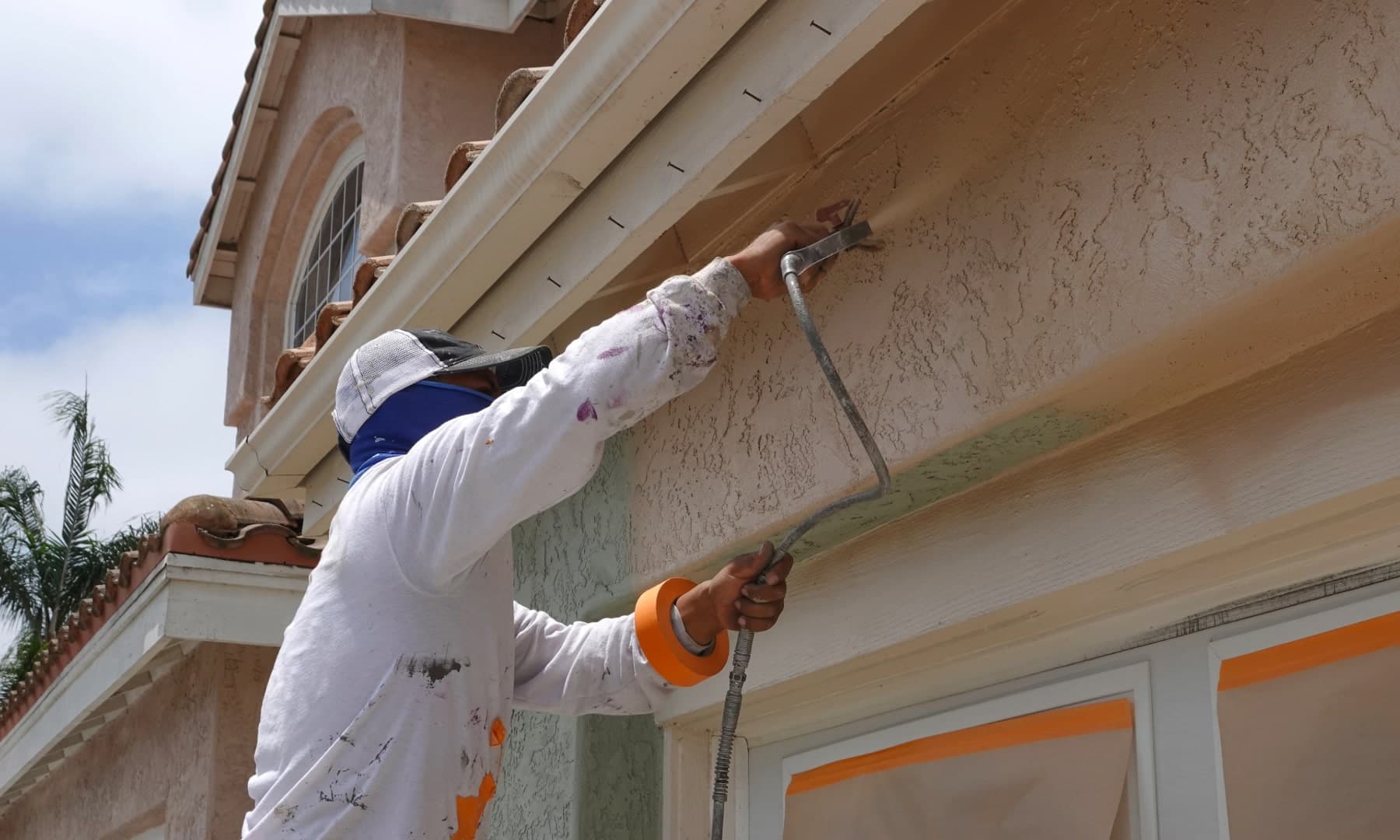
There is an old rule of thumb in this trade that 60 to 70 percent of a quality paint job is preparation, and after two decades of painting homes around St. George we would say that is about right. The topcoat is the part you see. The prep is the part that decides whether it is still stuck to the house in eight years. The problem for homeowners is that prep is also the easiest thing for a low bidder to quietly skip, because by the time the paint fails, the check cleared long ago.
So here is what real prep looks like, in order, so you can read a bid and ask the right questions. This applies to exteriors mostly, but the logic carries inside too.
First, washing. Every exterior in Southern Utah carries a layer of dust, chalked old paint, and often sprinkler mineral deposits, and paint will not bond to any of it. Proper washing means a real pressure wash or scrub with cleaner, and on chalky walls, checking afterward that the chalk is actually gone. A bid that does not mention washing at all is a bid to paint over dust.
Second, scraping and sanding. Any paint that is peeling, blistering, or flaking gets scraped back to a sound edge, because new paint over loose paint fails exactly as fast as the loose paint does. Scraped edges then get feather-sanded so the patch does not telegraph through the new coat. On trim and doors, glossy old surfaces get scuff-sanded so the new paint has something to grip.
Third, repairs. Stucco hairline cracks get opened slightly and filled with the right elastomeric patch material, not just painted over, because a painted-over crack reappears in months. Wood trim with rot gets repaired or replaced, nail heads get set and spotted, and damaged drywall inside gets patched and textured to match. Paint is a finish, not a filler.
Fourth, caulking. Every gap where trim meets stucco, where siding meets windows, and where two pieces of wood meet is a water entry point, and in monsoon season those gaps take driven rain straight into the wall. Old failed caulk gets cut out and replaced with a quality paintable sealant. This single step prevents more peeling on desert homes than any paint upgrade you can buy.
Fifth, priming. Bare wood, bare stucco patches, rusted metal, and stains all need the correct primer before finish paint, because finish paints are not designed to seal raw surfaces. Spot-priming every bare area is the minimum. Heavily chalked or never-painted stucco often needs a full coat of masonry sealer or primer so the topcoat does not soak in unevenly and die young.
Sixth, masking and protection. Windows, fixtures, roof lines, concrete, and plants get covered and taped cleanly. This one is partly about protecting your property and partly a tell: a crew that masks carefully almost always preps carefully, and a crew that overspray-fogs your windows was never going to caulk your trim.
Only after all of that does paint go on, at the full spread rate, in the number of coats the bid promised. Two coats means two distinct full coats, not one heavy pass sprayed twice while wet.
Now the red flags. Be suspicious of any bid that is dramatically cheaper than the others, because paint and labor cost roughly the same for everyone, so the savings almost always come out of prep, film thickness, or insurance. Watch for vague language like prep as needed with no specifics. Ask exactly what will be washed, scraped, caulked, and primed, and get it in writing.
More red flags: no mention of primer anywhere, a promise to complete a full exterior in one day, a materials line that does not name the actual product and grade going on your house, and no license number or proof of insurance. In Utah you can verify a contractor's license online through the state in about a minute, and any legitimate outfit will hand over their insurance certificate without flinching.
One more honest note: good prep is slow and boring to watch. A crew that spends the first day or two washing, scraping, and caulking your house before a drop of color appears is doing it right. When we bid painting work around St. George and Cedar City, the prep steps are itemized in the scope, and we would encourage you to demand the same from anyone else bidding against us.
What should be included in an exterior painting quote?
A written scope listing surface washing, scraping and sanding of failed paint, crack and wood repairs, caulking, spot or full priming, the specific paint product and number of coats, masking and protection, plus the contractor's license number and insurance. If prep steps are missing or vague, ask before you sign, not after the paint fails.
Do painters really need to pressure wash before painting?
On exteriors, yes. Desert homes carry dust, chalked binder from old paint, and mineral deposits, and new paint bonds to that loose layer instead of the wall. Washing, then letting the surface dry fully, is the foundation the entire job sits on.
Why is one painting bid so much cheaper than the others?
Paint and labor rates are similar across legitimate companies, so a dramatically low bid usually means skipped prep, thinned paint, fewer coats than promised, or missing insurance. Compare the written scopes line by line instead of the bottom numbers, and verify the license with the Utah Division of Professional Licensing.